









Case Picking vs. Batch Picking: Which Cuts Travel Time?
By Daryl Grove · October 27, 2026 · 11 min read
What Is Case Picking? A Clear Definition
Case picking is a fulfillment method in which workers pull full cases (cartons) of product to fill customer orders, instead of single units or whole pallets. It sits between piece picking and pallet picking, and it shows up most often in wholesale, food and beverage, retail replenishment and 3PL operations that ship to stores or other businesses.
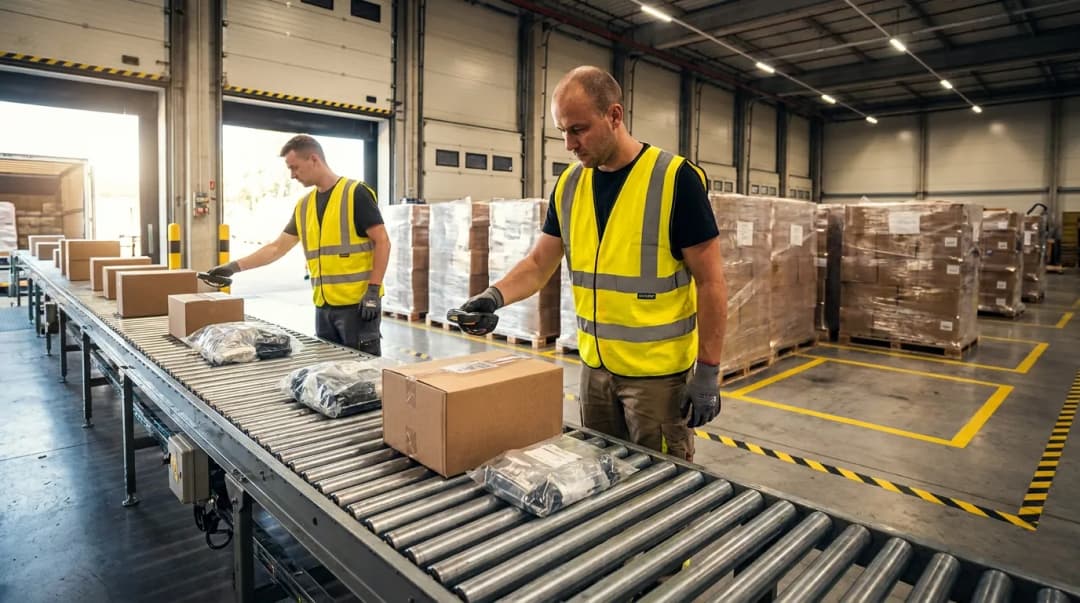
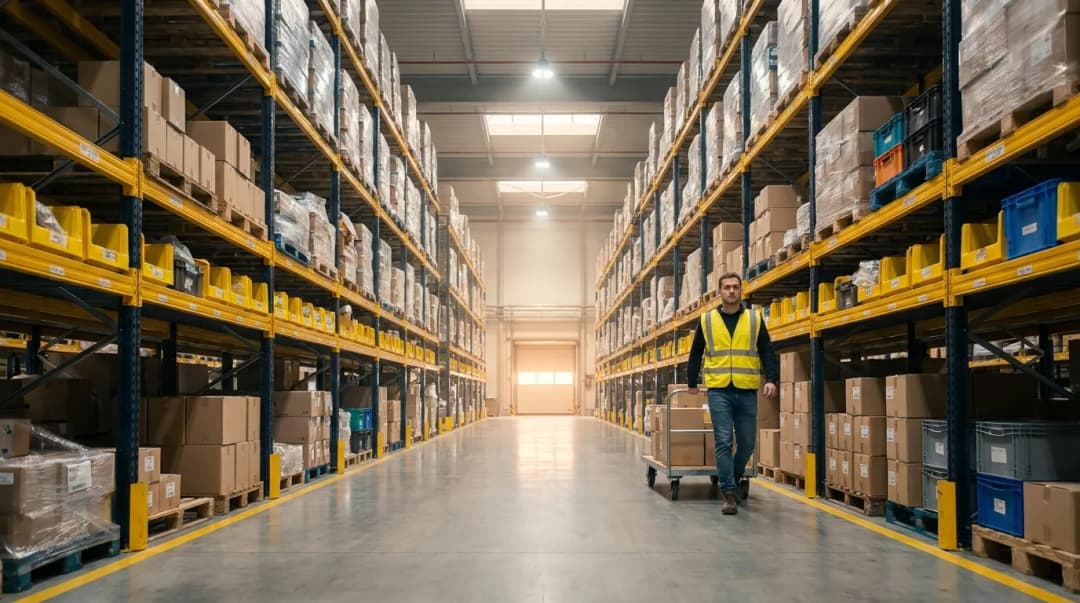
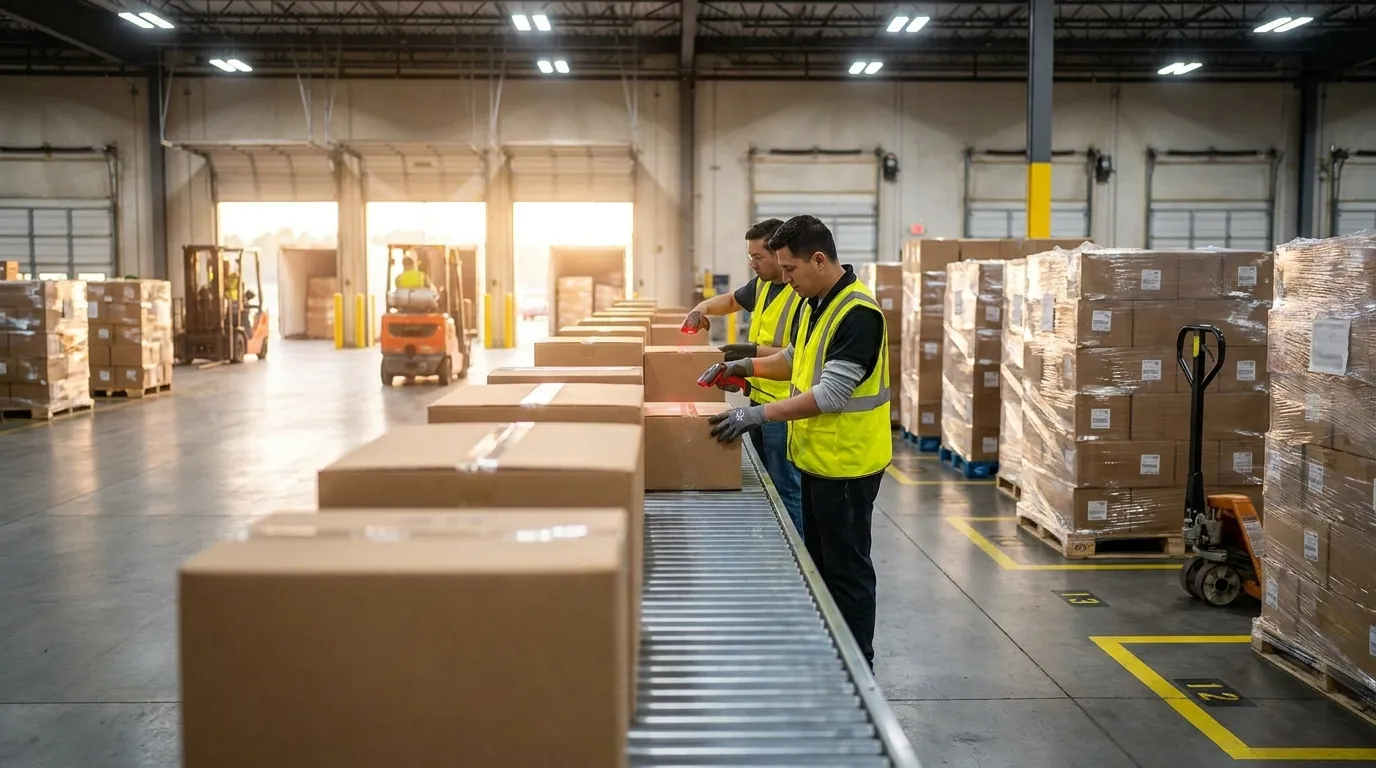
On the floor, a picker walks or drives to a slot, scans the location and the carton barcode, then stacks the case onto a pallet, cart or conveyor. Product usually comes from pallet-flow racks, carton-flow lanes or floor-level positions. Because every pick is bigger and heavier than a single item, travel distance, ergonomics and the quality of the finished pallet matter as much as raw speed.
A SKU (stock keeping unit) is a unique product identifier, such as a 12-pack of one specific beverage. Carton-level fulfillment performs best when orders hold a moderate number of SKUs, each ordered in multi-case quantities.
What Is Case Picking vs. Batch Picking? Side-by-Side Definitions
Picking by the case: Workers select whole cartons to fill orders. This term describes the unit of measure.
Batch picking: One picker gathers items for several orders during a single trip, then sorts them by order afterward. This term describes how orders are grouped for travel.
Put simply, the first answers what you pick, and the second answers how many orders you pick at once. They are not competing options. A team can batch cartons, batch eaches, or pull cases for one order at a time (discrete picking).
How Do Case and Batch Picking Differ from Piece and Pallet Picking?
Most warehouses classify picking by unit of measure:
- Pallet picking: Whole pallets travel from storage to shipping, with the fewest touches and the most units per pick.
- Carton picking: Full cases are built onto mixed or single-SKU pallets.
- Piece (each) picking: Individual units go into totes or shipping cartons, a common setup in e-commerce.
Batching can apply to any of these levels. Many mid-size distributors run all three: pallets for large customers, cartons for store orders, and pieces for small accounts or direct-to-consumer channels.

How Does Case Picking Work? A Step-by-Step Workflow
Every carton-level order moves through the same sequence, from release to staging. In an RF-scanner operation, the WMS directs each move and checks every scan, which keeps accuracy steady as volume climbs.
On paper the process looks simple. What separates a fast operation from a slow one is execution: how orders reach the floor, how locations are slotted, how routes are sequenced and how cartons stack into stable, shippable pallets.
What Are the Steps in a Case Picking Workflow?
- Order release: Orders drop to the pick area one at a time or in a wave, grouped by carrier cutoff or delivery route. Our comparison of wave and waveless release strategies covers the tradeoffs.
- Task generation: The system turns order lines into tasks, assigns pickers and sequences locations.
- Pick path: Workers follow a directed route, usually serpentine or zone-based, to avoid backtracking.
- Equipment: Depending on carton weight and volume, teams use electric pallet jacks, double-pallet jacks, carts or pick-to-conveyor lines.
- Scan validation: The picker scans the slot and the carton barcode, often a GS1 GTIN, to confirm SKU and quantity.
- Pallet build and staging: Heavy cartons go on the bottom. The load is then wrapped, labeled and staged by dock door or route.
When Is Case Picking the Right Fit?
This method suits operations where:
- Customers such as stores, restaurants and distributors buy full cartons.
- Most order lines request several cartons per SKU.
- The catalog runs from hundreds to a few thousand SKUs with moderate to high velocity.
- Products ship in stable, palletizable boxes rather than loose eaches.
When lines typically call for one or two units, piece picking usually wins. When they call for 40 or more cartons of a single SKU, full-pallet or layer picking may be more efficient.
Which KPIs Measure Case Picking Performance?
Track these core metrics:
- Cases picked per labor hour, which varies widely with SKU density, travel distance and how heavy the cartons are.
- Order accuracy, measured as error-free orders shipped divided by total orders.
- Travel time as a share of total pick time.
- Cost per case.
- Damage rate and pallet-build exceptions.
Damage deserves extra attention in beverage and grocery, where one crushed carton on a bottom tier can force a full rebuild. Published industry ranges are directional at best, so establish your own baseline before comparing against outside benchmarks.

What Is Batch Picking and How Does It Work?
Batch picking is a method in which one picker gathers items for several orders in a single trip. Those items are then separated by order, either along the route or afterward. The goal is less walking. Instead of visiting a popular SKU location ten times for ten orders, the picker stops there once. This approach is one of several standard order picking methods.
It pays off most when many orders share SKUs and each order has few lines. It is common in e-commerce and parts distribution, and it appears more and more in case picking operations where orders overlap heavily on fast movers. The trade-off is extra sorting work and heavier reliance on system-driven accuracy checks.
How Is Batch Size Determined?
Batch size, meaning the number of orders picked together, depends on four limits:
- Equipment capacity: how many totes, carts or pallet positions one picker can carry.
- Order overlap: more shared SKUs means more travel saved per batch.
- Cutoff times: large batches delay the first finished order.
- Sorting effort: bigger batches add downstream sort time and error risk.
Good warehouse picking software balances these limits by grouping orders on shared SKUs, zone, carrier or ship time.
Sort-While-Pick vs. Pick-Then-Sort: What's the Difference?
Sort-while-pick: Items go straight into order-specific containers as the picker moves through the aisles. No separate sort step is needed, but every pick requires choosing the correct container, usually guided by RF prompts or put lights.
Pick-then-sort: The picker pulls total quantities for all orders, and items are divided afterward at a sortation station or conveyor. Picking moves faster, at the cost of another handling step and more floor space.
With cases, building two pallets at once on a double-pallet jack is a typical way to sort en route. Sites with sortation conveyors usually prefer a separate downstream sort.
How Does Batch Picking Relate to Cluster, Wave and Zone Picking?
- Cluster picking: a picker pushes a cart holding multiple order containers and sorts at each stop.
- Wave picking: releases orders by time window, such as a carrier cutoff. One wave may contain several batches. It governs timing, not trip consolidation.
- Zone picking: each picker owns a section of the building, and orders pass between zones. Batches can run inside each zone.
These methods stack on one another rather than competing.

Case Picking vs. Batch Picking: How Do They Compare?
Case picking describes the unit being picked, while batch picking describes how orders are grouped. The fair matchup is discrete case-level picking, where one trip fills one order, against batching, where a single trip serves several orders. The comparison below scores both on the factors operations leaders weigh most.
In short, the discrete approach is simpler and keeps every order separate by design. Batching accepts extra sorting and more system logic in exchange for much less walking. Many facilities get the best result by applying batch logic to full-case orders, which the next section covers. To see these methods in motion, watch how common order picking methods look on a warehouse floor.
Head-to-Head Comparison Table
Nine factors are laid out below, each contrasting single-order trips with multi-order trips:
- Order profile: One-order-per-trip work handles multi-case orders with a few to a moderate number of lines. Grouped trips shine with many small orders that share SKUs.
- SKU velocity: The discrete style copes with moderate to high velocity spread across the catalog. Grouping pays off most when a concentrated set of fast movers dominates demand.
- Equipment: Single-order runs rely on pallet jacks, carts or pick-to-conveyor lines. Multi-order runs call for multi-tote carts, twin-pallet trucks or sortation equipment.
- Productivity: Output on discrete trips is capped by travel between locations. Combined trips cut the number of loops, and the gain rises or falls with SKU overlap.
- Accuracy drivers: Location scans, carton scans and pallet-build checks protect discrete orders. Batches depend on scan-to-container validation and correct sorting.
- Labor impact: Discrete work is quick to train but travel-heavy. Batching trims walking yet adds sort labor.
- Pros: Simplicity, built-in order integrity and easy audits on one side; fewer trips and higher picks per hour on the other.
- Cons: Repeat visits to the same slots for discrete picking; sort errors, release delays and heavier system dependency for batching.
- WMS requirements: Task sequencing and RF validation cover the discrete model. Batching also needs grouping rules, routing across the whole batch and sort direction.
Output varies with layout, case weight and order mix, so benchmark either method against your own time studies.
Which Picking Method Fits Your Operation? A Quick Decision Framework
Treat these signals as a starting point:
- Lines per order: Short orders (1 to 5 lines) at high volume point toward batching. Long orders point toward discrete or zone picking.
- Units per line: Several cases per line suits case-level work; single eaches suit piece picking; near-full-pallet quantities suit pallet picking.
- SKU mix: When a small group of fast movers drives most picks, group those SKUs into batches.
- Layout: Long aisles and scattered locations magnify the savings from batching. A compact forward-pick area shrinks them.
If your orders ship in full cases and many of them share SKUs, a combined approach is likely the strongest fit.
How Do Case Picking and Batch Picking Work Together?
Combining the two methods means grouping several case-level orders into one trip. An operator runs a double-pallet jack or multi-pallet cart while the WMS indicates which cartons belong on which order's pallet. Most combined workflows sort while picking, so pallets leave the pick area ready to wrap and nobody re-handles heavy cartons at a separate sort station.
The approach performs best with two supports: velocity-based slotting, which puts the fastest movers in the most accessible locations, and pick paths the system calculates across every order in the batch. If you're comparing these methods against your current process, see our article on evaluating warehouse order picking. The hypothetical scenario below shows how the math adds up.
Worked Scenario: Batching Case Orders at a Beverage Wholesaler
Hypothetical example for illustration. A beverage wholesaler ships 40 store orders per shift block, each averaging six case lines. Picked one at a time, every order requires a loop of about 1,200 feet.
- Discrete: 40 orders × 1,200 ft = 48,000 ft. At a rider pallet-jack pace of roughly 300 feet per minute, that's about 160 minutes of travel.
- Batched (4 orders per trip): 10 trips. Because orders overlap on popular SKUs, each combined loop grows only to about 1,500 ft, for a total of 15,000 ft, or about 50 minutes.
Travel falls by roughly 110 minutes. Sort-while-pick handling and pallet-build checks give back some of that time, but the net labor gain remains large.
How Does Velocity-Based Slotting Multiply the Savings?
In many distribution operations, a minority of SKUs drives most picks, a pattern often described through Pareto or ABC analysis. Placing those items near the dock and along the main aisle shortens every batched loop.
Continuing the example, re-slotting top sellers could cut the average loop from 1,500 to about 1,100 feet: 11,000 ft total, or roughly 37 minutes. Re-slot on a regular schedule, since demand shifts with seasons and promotions, especially in beverage.
What WMS Capabilities Enable Both Methods?
Running case and batch picking side by side only works when the software makes the hard decisions: which orders belong together, what sequence to visit locations in, whether each scan matches the task, and when a pick face needs restocking. Without those controls, batching usually adds mispicks and sorting rework instead of cutting labor cost.
A useful way to evaluate any system is to pair each capability with a KPI you can record before go-live and again a few months after. That keeps the comparison focused on floor results instead of feature lists.
WMS Capabilities Checklist Tied to KPIs
- Order batching logic: Groups orders by shared SKUs, zone, route or carrier cutoff. KPI: orders per trip, travel time per order.
- Pick-path optimization: Sequences every location in a batch into one efficient walk. KPI: feet traveled per pick, cases per labor hour.
- RF scan validation: Confirms location, SKU, quantity and destination pallet before the picker moves on. KPI: order accuracy, mispick rate.
- Replenishment triggers: Min/max or demand-based moves keep forward locations full. KPI: short picks, picker wait time.
- Slotting analysis: Velocity reporting shows which items should sit closer to shipping. KPI: average route length.
- Wave and cutoff management: Releases work in time to meet carrier departures. KPI: on-time shipment rate.
Where Cadre Technologies Fits
Mid-size 3PLs and distributors that run RF-scanner workflows across case, piece and pallet picking tend to face one central question when choosing software. If you are deciding between discrete case picking and batching, or planning to blend the two, the real test is whether a WMS can group orders, sequence routes and validate scans the way your order profile requires.
Bring your own data to any evaluation. Ask how the platform you evaluate would group a typical shift's orders, how it would route a picker building two pallets at once, and what the scanner shows when someone scans the wrong carton. Answers tied to your SKU mix and layout reveal far more than a feature matrix does. For broader context on how picking fits into daily operations, our overview of order picking in warehouse operations is a good companion read. Request a Demo to see how Cadre Technologies approaches these workflows.
Frequently Asked Questions
What is the difference between case picking and batch picking?
Case picking defines the unit you pick (full cartons), while batch picking defines how many orders you pick in one trip. They are not competing choices. A warehouse can batch cartons, batch individual units, or pull cases for a single order at a time, which is called discrete picking.
When should a warehouse use case picking?
Case picking fits best when customers such as stores, restaurants and distributors buy full cartons and most order lines request several cartons per SKU. Catalogs of hundreds to a few thousand SKUs with moderate to high velocity suit it well. If lines usually call for one or two units, piece picking tends to win, while 40 or more cartons of a single SKU points toward pallet or layer picking.
Can you batch case picking orders?
Yes. An operator uses a double-pallet jack or multi-pallet cart to build pallets for several orders in one trip, with the WMS directing which cartons go on which pallet. Most combined workflows sort while picking, so heavy cartons are not re-handled at a separate sort station and pallets leave the pick area ready to wrap.
How much travel time can batching case orders save?
Savings depend on SKU overlap and layout. In a hypothetical beverage wholesaler shipping 40 store orders with 1,200 foot loops, discrete picking covers about 48,000 feet, roughly 160 minutes at 300 feet per minute. Batching four orders per trip drops travel to about 15,000 feet, or around 50 minutes, before sorting and pallet checks give some time back.
Which KPIs should I track for case picking?
Core metrics are cases picked per labor hour, order accuracy, travel time as a share of total pick time, cost per case, and damage rate. Order accuracy equals error-free orders shipped divided by total orders. Because published industry ranges are directional at best, set your own baseline before comparing against outside benchmarks.
What WMS features are needed to run case and batch picking together?
You need order batching logic that groups orders by shared SKUs, zone, route or carrier cutoff, plus pick-path optimization and RF scan validation. Replenishment triggers and slotting analysis keep forward locations full and fast movers close to shipping. Pair each feature with a KPI measured before and after go-live, such as orders per trip or mispick rate.