









Organizing Your Warehouse with Labels: The Ultimate Guide
By Daryl Grove · February 8, 2023 · 14 min read

8 minutes
If you’re like most warehouse managers and operators, the organization of your warehouse is always top of mind. You need your warehouse employees to be able to find things quickly and easily, and labels can help make that happen. In this blog post, we will discuss the benefits of using labels in your warehouse, as well as how to organize them effectively. We’ll also provide some tips for making sure your labels are visible and easy to read.
The Importance of Warehouse Organization
A well-organized warehouse is essential for efficient operations. When everything has its designated place, warehouse staff can quickly and easily find what they need without wasting time searching. It also minimizes the risk of misplacing items and reduces the chances of inventory errors. Overall, organizing your warehouse properly is essential for ensuring that the work environment runs smoothly and efficiently.
Related: Warehouse Layout and Design: Tips for an Efficient and Optimized Operation
Understanding Warehouse Labeling
Warehouse labeling is an important part of warehouse organization. Labels provide a visual indicator of where items are located, what they contain, and who they belong to. They’re also helpful for identifying hazardous materials and ensuring compliance with safety regulations.
Warehouse labels come in many forms, including barcodes, stickers, and even magnetic signs. The type of label you choose will depend on the size of your facility and the types of items you need to store. For the smallest warehouses, simple stickers might be sufficient for identifying items. However, for most warehouses, more robust labeling systems like barcodes are typically necessary.
Regardless of the type of label you use, make sure that they are easy to read and visible at a glance.
Benefits of an Effective Warehouse Labeling System
An effective warehouse labeling system can provide several benefits, including:
Warehouse Label Categories
The type of labels used in a facility will depend on the types of items stored and the layout of the warehouse. Some common types of labels include:
Putting Your Labels into Action
Now that you understand the importance of warehouse labels, it’s time to put your labels into action. Here are some of the most important uses for labels in a warehouse:
1. Warehouse Rack Labels
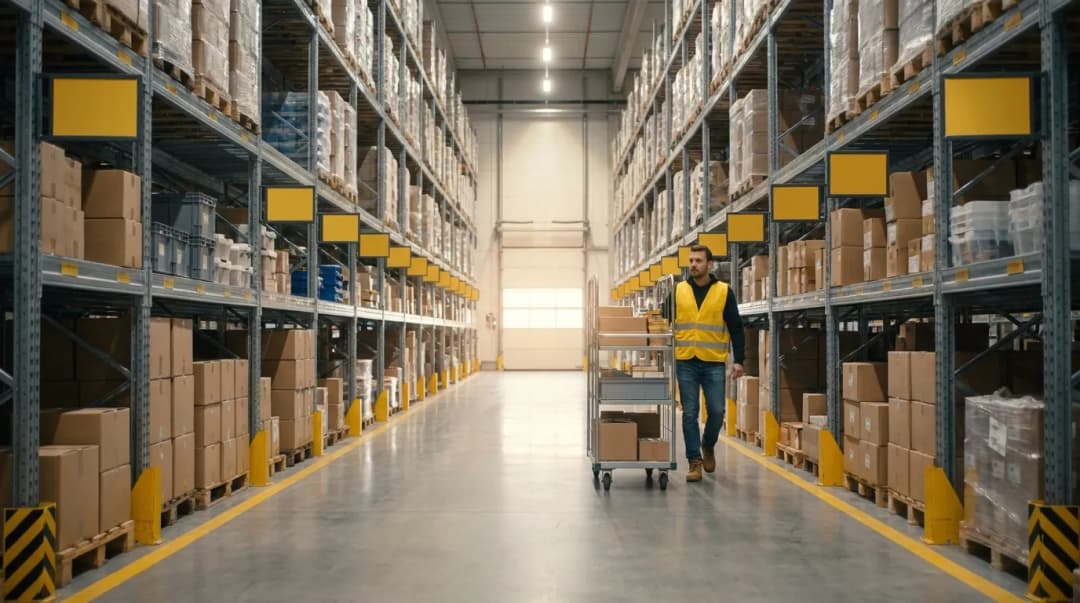
These labels are designed to adhere directly onto racks, allowing employees to quickly locate items with ease. They come in a variety of sizes and materials and can be customized to display important information such as product name, SKU, expiration date, and more. If using a WMS Radio Frequency (RF) scanning system, consideration for size and reflective material will be important. Rack labels can also be color-coded to represent different categories of products, which further enhances the efficiency of the picking process.
2. Warehouse Floor Labels
Floor labels provide an organized way to store and locate items while keeping your facility floor neat and tidy. They are usually made of durable material that can withstand foot traffic, making them ideal for areas with high levels of activity. Floor labels can also indicate zones for various items, designate pathways for efficient movement, and mark emergency exits or hazardous areas so that safety protocols are easily followed, which helps in maintaining a safe working environment.
3. Hanging Barcode Labels
These labels allow you to hang merchandise or boxes from shelves or racks in an organized manner, allowing quick access to items. The labels contain barcodes that can be scanned for fast and accurate tracking of goods. WMS RF scanners can scan these labels at long range (45 feet for example). Hanging labels do not get damaged unlike floor labels.
4. Container, Tote, and Tray Bar Code Labels
These labels are designed for use with containers, boxes, or trays used for storing products in a warehouse setting. They provide quick and easy identification of the contents, as well as information such as product name, SKU, and expiration date.
5. Pallet Barcode Labels
Pallets are widely used to transport products throughout a warehouse, and pallet barcodes provide easy identification of the contents. Pallet labels can be applied directly onto the pallets and scanned for accurate tracking of inventory levels.
Warehouse Rack Labeling Methods
Warehouse rack labeling is an important part of efficient inventory tracking and management. There are two main concepts when it comes to labeling a rack: standard labeling and serpentine labeling. Both of these methods are commonly used in warehouses today.
Standard Rack Labeling
Standard rack labeling is a common and straightforward method of labeling a warehouse rack. It involves creating labels that include product information such as SKU, product name, expiration date, and more. The rack bays are numbered and labeled in an order that goes from left to right (or right to left) and repeats in the same direction with each rack. Dynamic rack labeling will not contain product or product information. Often the labeling is in the format of aisle, bay, level and slot.
Serpentine Rack Labeling
Serpentine labeling is an alternative method of labeling that involves alternating the order of labels between racks. For example, bays may be numbered A1, A2, and A3. Then, turning the corner after A3, you’ll find A4, A5, etc on the rear side of that rack. In this way, serpentine labeling flows in a winding, “S” shape. Serpentine labeling can be beneficial because it allows employees to quickly find items without guessing their location.
Why Use Warehouse Labels?
Labels are a great way to organize your warehouse for many reasons, including:
-
Efficient Navigation – Warehouse labels, such as aisle signs, rack labels, floor labels, and more provide an efficient way to navigate a warehouse, allowing employees to quickly locate items and products without wasting time searching through shelves or boxes. Labels also offer a comprehensive view of the entire warehouse, providing information such as contents, location, and quantity.
-
Tracking Accuracy – Having accurate tracking information is essential for a successful warehouse. Using barcode scanners to scan labels can help ensure that items are correctly tracked, allowing managers to keep an accurate count of stock and prevent losses due to misplacement or theft.
-
Streamlined Processes – Labels can help streamline the processes involved in stocking, picking, and packing products by providing quick access to the information needed. This can help speed up warehouse operations and reduce errors.
-
Right Products in the Right Place – Labels allow you to control how products are stored, ensuring that items are placed in the right aisle or bin for easy access and proper storage. This helps prevent confusion and delays due to incorrect product placement.
-
A Customizable Solution – With labeling solutions, you can customize labels to include the information you need such as product name, SKU, aisle number, and expiration date. This allows for easy FIFO inventory management and gives employees the ability to quickly access information without having to search through boxes or bins.
Businesses that Commonly Need Warehouse Barcode Labels
Steps for Effective Warehouse Labeling
#1 – Determine the Types of Labels Needed
The first step in creating an effective warehouse labeling system is to determine what types of labels are needed. Consider the warehouse layout and the type of goods stored to determine the types of labels needed.
#2 – Determine Label Placement
Once the types of labels needed have been determined, the next step is to determine where the labels should be placed. Consider visibility and durability when determining label placement. Labels should be placed in a visible location that is easily accessible, and they should be made of a durable material that can withstand frequent use.
#3 – Choose the Right Label Material
The right label material is essential for an effective warehouse labeling system. Consider environmental factors, such as exposure to moisture or extreme temperatures, and the label’s life expectancy. The right material will ensure that the labels are long-lasting, easy to read, and resistant to damage. Reflective qualities of the labels is also important for the accuracy of scanning via WMS RF systems. Labels that resist tearing, fading, smudging, chemicals, and abrasion are particularly valuable where products may be exposed to spills, harsh substances, or mechanical wear.
#4 – Label System Implementation
The final step in creating an effective labeling system is to implement the label system. This involves printing the labels, applying them to the appropriate location, and maintaining the labels to ensure their longevity and readability. This may include replacing labels that become worn or illegible over time.
Tips for Making Warehouse Labels Visible and Easy to Read
The most important thing to remember when creating warehouse labels is that they need to be visible and easy to read. Here are a couple of tips for making sure your labels stand out:
-
Use bright, clear colors – Your labels should be easily visible from a distance, so use bright, bold colors when labeling items. This will make it easier for employees to locate what they need quickly and accurately.
-
Make sure the text is legible – It may seem obvious, but making sure your labels are legible is essential. Use a simple font that is easy to read and make sure that there’s enough contrast between the text and the background color.
How Labeling Improves Workflow and Reduces Errors
A clear labeling system lets warehouse staff follow a systematic approach while picking or replenishing stock, which minimizes the back-and-forth movement that often hampers efficiency. When employees can easily interpret label information, they perform their duties with confidence and new hires need less training time.
A well-structured labeling system also supports layout decisions. By analyzing the frequency of item retrieval, managers can adjust product placement so the most commonly picked items are easily accessible, further reducing unnecessary labor costs.
Labeling accuracy matters just as much as labeling coverage. Mislabeling can lead to misplaced inventory and shipping errors, resulting in costly returns and customer dissatisfaction. A color-coded labeling system can help distinguish different categories of items or workflows, simplifying decisions during picking and sorting. Pairing labels with barcode scanners or RFID systems enables real-time inventory tracking, so employees can quickly verify product information and stock levels stay current.
Planning, Installing, and Maintaining Your Labeling System
Before implementing a labeling system, conduct a thorough assessment of the warehouse layout and inventory management processes. Identifying the areas that require labeling will help streamline the design process.
Planning and Designing Your Labeling System
Consider factors such as the volume of products, their storage locations, and the various categories involved. It is also beneficial to involve key stakeholders in the planning phase, including warehouse staff and inventory managers, to gather insights on practical labeling needs and preferences. This collaborative approach leads to labeling solutions that fit the specific challenges of your warehouse.
Installation and Maintenance
Apply labels in a consistent location for all items to make them easy to find and scan. Conduct regular assessments to ensure labels still meet operational needs, and keep them current as inventory changes. Training staff on the importance of label integrity and visibility fosters a culture of accountability, so the labeling system stays effective and reliable over time.
The Role of Technology in Warehouse Labeling
Technology has made warehouse labeling processes more effective and streamlined, from how labels are printed to how they are read.
Label Printing Technologies
Modern label printers produce durable, high-quality labels at scale. Many use thermal transfer or direct thermal printing, which improves print quality and helps labels withstand environmental conditions such as moisture and temperature fluctuations. Some printers also offer mobile printing, so employees can print labels on demand on the warehouse floor and adapt quickly to changing inventory or shipping requirements.
Scanning and Reading Technologies
Handheld scanners enable real-time tracking and inventory management, and many support both barcode and QR code scanning to speed up item location and improve the accuracy of inventory counts. Integrating scanning with warehouse management software automates inventory updates and minimizes human error, and the data collected can be analyzed to identify trends in inventory movement and inform replenishment decisions.
RFID (Radio Frequency Identification) is also becoming more common in warehouse labeling. RFID tags can be read without direct line of sight, allowing bulk inventory checks and reducing the time spent on manual scanning.
Tips for Organizing Your Warehouse with Labels
Organize Warehouse with Labels: Conclusion
An effective warehouse labeling system is a simple and effective way to keep your warehouse organized. By determining the types of labels needed, determining label placement, and implementing the label system, you can improve inventory management features, increase productivity, and enhance safety and compliance. Remember to maintain the labels to ensure their longevity and readability. With the right system in place, you can keep your warehouse running like a well-oiled machine.
To see how our WMS can help your business stay organized with labeling and much more, request a demo.
More Information:
How Do You Label a Warehouse Rack?
Labeling a warehouse rack can be done in several ways. The most common way is to use barcode labels with adhesive backing – these can be attached to any surface such as the rack bay to provide accurate tracking information when scanned.
It’s important to make sure your labels are visible, legible, and easy to read. Using bright colors, simple fonts, and durable materials will help ensure that your labels stand out and can be easily read. Additionally, you should also consider using waterproof labels for items stored in cold storage or other extreme conditions. This will provide extra protection against moisture and wear and tear.
Finally, it’s important to ensure that your labels are properly placed on the racks so they can be easily scanned. Place the labels in prominent positions such as near the top of each shelf or at the end of each aisle for improved visibility and accuracy.
How to Label Warehouse Shelves?
Common Warehouse Label Materials
We’ve discussed the types of labels used in the warehouse, but what about the materials they’re printed on? The material you choose should be durable enough to withstand regular handling, as well as temperature and moisture fluctuations. Common warehouse label materials include:
The best warehouse labels for your business will depend on the type of items being stored and environmental conditions. The right solution may also include variances such as removable labels, or other options specifically designed for your company or industry.
Frequently Asked Questions
How often should warehouse labels be replaced or updated?
Label replacement frequency depends on material quality, environmental conditions, and wear patterns. High-traffic areas may require updates every 6-12 months, while protected locations can last 2-3 years. Monitor for fading, damage, or adhesive failure. Barcode labels should be replaced immediately if scanning becomes unreliable to maintain operational efficiency.
What’s the difference between static and dynamic warehouse labeling systems?
Static labels contain fixed product information like SKU and product name, while dynamic labels show only location identifiers without specific product details. Dynamic systems offer more flexibility when inventory changes frequently, allowing products to move between locations without relabeling. Static labels work better for dedicated storage areas with consistent product placement.
Can warehouse labels work effectively in extreme temperature environments?
Yes, with proper material selection. Freezer-grade labels withstand temperatures as low as -80°F, while high-temperature labels handle up to 600°F. Synthetic materials like polyester and vinyl outperform paper in extreme conditions. Consider thermal transfer printing for durability and choose adhesives specifically rated for your temperature range to ensure labels remain readable and attached.
How do I calculate ROI for implementing a warehouse labeling system?
Calculate ROI by comparing implementation costs against time savings and error reduction. Measure baseline picking times, inventory accuracy rates, and training hours before labeling. After implementation, track improvements in these metrics. Most warehouses see 20-30% faster picking times and 90%+ inventory accuracy, typically achieving ROI within 6-12 months through reduced labor costs and fewer errors.
What size should warehouse rack labels be for optimal scanning distance?
Standard rack labels should be 4×6 inches minimum for reliable scanning at 3-5 feet. For long-range RF scanners (up to 45 feet), use 6×8 inch or larger labels with high-contrast printing. Barcode height should be at least 0.75 inches with adequate quiet zones. Consider reflective materials for low-light conditions and ensure labels are positioned at scanner-friendly heights between 3-7 feet.
How much do warehouse labeling systems typically cost to implement?
Implementation costs vary significantly based on warehouse size, label types, and technology integration. Basic barcode labeling systems can start at $500 to $2,000 for small warehouses, while comprehensive RFID systems may cost $10,000 to $50,000 or more. Consider label materials, printing equipment, software integration, and training expenses when budgeting for your labeling system.
What software integrates best with warehouse labeling systems?
Cadence WMS integrates natively with warehouse labeling systems, supporting barcode scanning, real-time label generation, and inventory tracking out of the box. When evaluating any WMS, look for support for your label formats, compatibility with existing ERP or inventory systems, and the ability to scale as your operation grows.
What are common mistakes when implementing warehouse labeling systems?
Common mistakes include inconsistent labeling standards, poor label placement, inadequate staff training, and choosing low-quality materials. Many warehouses also fail to integrate labels with inventory software or don’t establish clear maintenance procedures. Avoid rushing implementation without proper planning and testing phases to ensure system effectiveness.