








3PL Billing: Guide to Optimizing Your Invoicing Process
By Daryl Grove · July 22, 2024 · 19 min read

11 minutes
3PL billing refers to how third-party logistics providers charge for their services. This involves various fees like receiving, storage, and outbound fees. Managing these bills manually can lead to errors and inefficiencies. This article will break down the key components, explore common billing models, and show how automation can simplify the process.
Key Takeaways
-
Automated 3PL billing systems enhance accuracy and operational efficiency, reducing errors and improving customer satisfaction.
-
Common billing models like Activity-Based Pricing, Flat Rate Pricing, and Cost-Plus Pricing provide transparent and flexible options for clients, meeting diverse needs.
-
Implementing automated billing includes selecting the right software, integrating with existing systems, training staff, and setting up custom billing rules to ensure seamless and accurate invoicing.
Understanding 3PL Billing
Third-party logistics (3PL) billing is the cornerstone of financial stability and operational efficiency for third party logistics providers. The billing process is pivotal in avoiding economic pitfalls and serves as a vital supply chain metric for growth and performance. At its core, 3PL billing involves a complex process that starts with a contract agreement outlining the scope of work, service levels, pricing terms, and payment methods.
Optimized 3PL billing fosters transparency and ensures precise financial calculations, thereby improving both logistics and supply chain management. The use of billing software can greatly streamline these processes, managing everything from transportation to warehousing and value-added services. We will examine the crucial components and widely used billing models that constitute this intricate system.
Key Components of 3PL Billing
The 3PL billing process encompasses various components, each critical for accurate billing. These components include:
-
Receiving fees: Charged for services like inspecting and handling inbound shipments.
-
Storage fees: Depend on factors such as the type of goods, space used, and duration of storage.
-
Warehousing fees: Include space allocation and storage duration.
These components are all a significant part of the billing process.
Outbound fees cover activities such as picking, packing, and labeling products for shipping to end customers or retailers. Additional service fees may include charges for special projects, warehouse labeling, and other miscellaneous tasks. Given the variety of fees and charges, customer-specific contracts further complicate 3PL billing, requiring unique service charges and storage calculations tailored to individual goods and transactional scenarios.
The complexity of 3PL invoicing arises from various transactional service charges, storage calculations, and diverse price points based on volume and conditions. This complexity necessitates the use of specialized billing software to ensure accurate billing and transparency.
Common Billing Models in 3PL
There are several common billing models in 3PL, each offering different advantages. The Activity-Based Pricing model assigns predetermined rates for specific activities, providing transparency for clients. Charges are based on the order volume, with separate rates for:
-
Receiving
-
Warehousing
-
Packing
-
Transportation
Flat Rate Pricing involves charging a fixed, pre-negotiated fee for a set of services over a specific period, offering predictability in billing. Clients benefit from knowing the exact amount they will be charged, regardless of the actual volume of services utilized.
The Cost-Plus Pricing model charges the client based on actual costs incurred plus an agreed-upon markup. This model ensures that clients are billed fairly, reflecting the true cost of services rendered.
Lastly, the Fixed-Variable Pricing model combines a baseline fixed fee for essential services with additional variable charges for extra services or resources used beyond the baseline. These models help 3PL providers meet diverse client needs and enhance billing transparency.
Challenges in Manual 3PL Billing
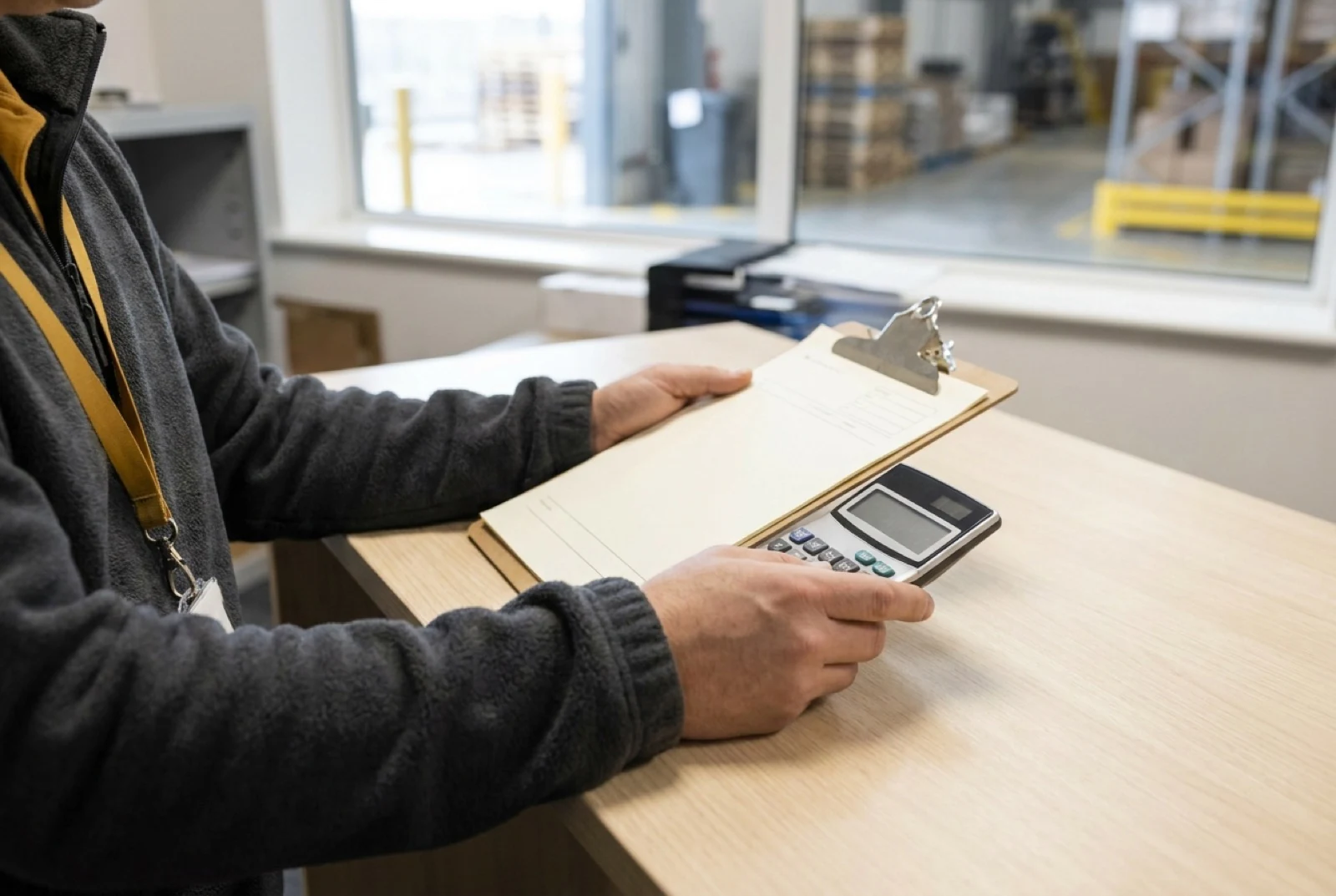
Manual 3PL billing processes are riddled with difficulties, potentially causing substantial revenue loss and hindrances to operations. Record-keeping and invoicing using spreadsheets or paper are cumbersome and prone to inaccuracies. These manual processes can extend the billing cycle, making it inefficient and time-consuming.
The problems with manual billing include:
-
Erroneous billing information
-
Lengthy procedures
-
Customer dissatisfaction
-
Disputes and damaged customer relationships
-
Multiple parties involved in billing and invoicing systems, leading to human errors and confusion.
Inaccurate Billing Data
Inaccurate billing data is a common issue in manual 3PL billing processes. Errors in data entry can lead to inaccurate charges, resulting in customer complaints and revenue loss. Disrupted cash flow is another consequence, as inaccurate invoicing affects the timely collection of payments.
The loss of revenue due to inaccurate charge captures and manual billing processes is a significant concern for 3PL warehouses. Ensuring accurate billing data is crucial for maintaining customer trust and financial stability.
Time-Consuming Processes
Manual billing processes are notoriously time-consuming. Pulling information from multiple sources and creating invoices using spreadsheets can significantly extend the billing cycle. This inefficiency burdens employees, reducing their focus on more profitable activities.
Consider a mid-sized 3PL handling distribution for several retail brands. With spreadsheet-based billing, someone needs to manually pull activity reports, cross-reference them against each client’s rate card, calculate charges for special services, apply volume discounts, and generate the invoice. This process might take a full day or more at month-end, and the potential for errors is substantial. The breaking point usually comes as more major clients are added, each with different billing structures and reporting requirements.
The extended billing cycle not only affects productivity but also delays revenue recognition. Automating these processes can lead to cost savings by saving time and resources, allowing employees to focus on tasks that drive revenue and improve customer satisfaction.
Customer Dissatisfaction
Customer dissatisfaction is a major consequence of billing errors and delays. Inaccurate invoices due to manual processes can jeopardize client relationships and lead to complaints. Timely and accurate invoicing is essential for maintaining customer satisfaction and trust.
Automated billing systems can enhance the customer experience by delivering accurate and timely invoices, thus reducing the risk of disputes and improving overall satisfaction.
Benefits of Automated 3PL Billing Systems
Automated 3PL billing systems yield multiple advantages such as improved billing precision, amplified operational efficiency, and superior financial operations. By adhering to specific protocols, automation reduces human errors and ensures accurate execution of billing processes.
The use of this technology enables employees to concentrate on tasks that generate revenue, thereby escalating productivity and profitability. Automated billing systems also provide real-time visibility into financial data, improving decision-making and operational transparency.
Enhanced Billing Accuracy
Billing accuracy is paramount in maintaining customer trust and satisfaction. Automated systems help achieve accuracy in invoicing by configuring customer contracts and standard functions. Automated data collection ensures billing accuracy by eliminating manual entry and enhancing data consistency.
Automating invoice generation offers several benefits, including:
-
Timely and accurate billing
-
Reduced manual errors
-
Accelerated month-end processes
-
Real-time charge capture
-
Reduced human interaction in billing workflows
-
Improved billing accuracy
-
Increased operational efficiency
Ensuring accurate billing through automated systems helps maintain customer trust and satisfaction, fostering long-term business relationships.
Increased Operational Efficiency
Automation significantly increases operational efficiency in 3PL billing. By using a unified system for billing, invoicing, and payments, 3PLs can reduce mistakes, prevent system disconnects, and streamline operations. Scheduled sales invoice generation automates the invoicing process, reducing the time and resources spent on manual billings.
Implementing billing automation can:
-
Reduce the time to send out invoices from several days to several minutes
-
Improve cash flow and operational efficiency
-
Automate low-level tasks like data entry and invoice generation
-
Allow employees to focus on revenue-generating activities
-
Increase productivity
Automation helps employees complete tasks faster, leading to better customer satisfaction and increased profitability.
Better Financial Operations
Automated billing systems have a positive impact on financial operations and profitability. Accurate billing ensures that all earned revenue is captured, improving overall profitability. Automating billing processes can boost profits by an average of 3% per month.
Real-time data capture improves cash flow by shortening billing cycles and reducing the time it takes to generate invoices. Integration with external software ensures all charges are captured and billed, enhancing revenue recognition and financial transparency.

Implementing an Automated Billing System
Implementing an automated billing system requires careful planning and execution. The first step is to identify the specific needs and requirements of the 3PL provider. Choosing the right software is crucial, as it should be scalable to handle future growth and increased transaction volumes.
Once the software is selected, integrating it with existing systems and training staff are essential steps. This ensures seamless operations and maximizes the benefits of automation. We will further investigate these steps for a more comprehensive understanding.
Choosing the Right Software
Choosing the right billing software is critical for successful automation. According to a recent report, almost half of the 3PL warehouses identified the requirement for automating billing as a primary factor in adopting warehouse management systems. This finding underscores the increasing importance of automation in modern warehouse operations. When selecting software, consider its scalability to handle future growth and increased transaction volumes.
Costs associated with implementing 3PL billing software include expenses like initial investment, maintenance, and training. Assessing these factors helps in making an informed decision that aligns with the 3PL provider’s specific needs.
Evaluating Total Cost of Ownership
Software pricing can be confusing, so look beyond the license or subscription fee. A complete view of total cost of ownership includes:
-
Software licensing or subscription fees
-
Implementation and configuration costs
-
Integration development expenses
-
Hardware requirements
-
Ongoing support and maintenance fees
-
Training costs
-
Cost of required customizations
Start by documenting your current pain points, the capabilities you need today, and what you will need in two or three years as you grow. Ask vendors for references from customers in your industry and of similar size, and talk to peers about their experiences.
Planning the Transition
Implementation projects that fail usually share common causes: inadequate planning, insufficient resources, poor change management, or trying to do too much too fast. Resist the urge to rush into configuration. Document your processes, clean up your data, and decide how you want the new system to work before you start. Also avoid trying to make the new system work exactly like the old one; be open to adapting your processes to the new system’s capabilities.
Integrating with Existing Systems
Integration with existing systems is crucial for seamless operations. When billing software is integrated with Warehouse Management Systems and accounting software, it streamlines the task of recording and reconciling invoices, payments, and other financial transactions. This integration simplifies the overall process and enhances efficiency. This integration ensures accurate billing data flow and reduces manual data entry errors.
Using APIs or middleware can facilitate the integration of billing software with other business-critical systems, ensuring compatibility and reducing data discrepancies. Effective integration enhances operational efficiency and accuracy in billing processes.
Training Staff
Training staff is essential for effectively using the new billing system. Training programs should include hands-on workshops to familiarize staff with the new software functionalities. Providing continuous learning resources and support helps staff stay updated on system updates and new features.
Having designated system champions within the team can assist others and address common issues, ensuring smooth adoption and effective use of the new system.
Real-Time Data Capture and Reporting
The practice of real-time data capture and reporting yields considerable benefits in 3PL billing. Some of these benefits include:
-
Ensuring accurate billing based on actual services rendered
-
Reducing chances of discrepancies or errors
-
Providing real-time access to relevant information
-
Aiding in making data-driven decisions
-
Helping businesses stay ahead of the competition.
Access to real-time data enables the generation of detailed reports, improving transparency and reliability in client communication. We will examine how monitoring activity and transactional data, coupled with the generation of detailed reports, can boost billing precision and decision-making.
Tracking Activity and Transactional Data
Tracking activity and transactional data in real-time is crucial for accurate billing. Data synchronization between the billing system and other platforms should be real-time to maintain accurate and up-to-date information. This reduces discrepancies caused by manual data entry, ensuring cleaner and more accurate billing.
Real-time charge capture uses technologies like barcode scanning or RFID to capture charges for services as soon as they are performed. Training staff to use mobile devices or PCs for real-time charge capture can lead to 100% billing accuracy and eliminate the need for manual records. This approach ensures that all services rendered are accurately captured and invoiced, significantly improving billing accuracy and operational efficiency.
Generating Detailed Reports
Generating detailed reports from real-time data provides visibility into billing data, allowing customers to track their spending and identify discrepancies quickly. Reporting tools within automated billing systems offer pre-defined reports and real-time data analytics for better decision-making.
Advanced analytics and reporting tools provide real-time insights into orders and shipments, enhancing strategic decision-making. These detailed reports facilitate prompt resolution of billing issues by providing clear insights into financial data, improving transparency and reliability in client communication.
Customizing Billing Profiles
Tailoring billing profiles within a 3PL WMS is vital to align client profiles with pricing agreements, apply pertinent billing rules, and guarantee accurate and transparent invoicing. Custom billing profiles can be tailored to meet the exact billing frequency preferred by clients, such as weekly or monthly cycles. This customization ensures that invoices are generated on time according to client-specific needs.
Creating custom billing profiles involves setting up custom billing rules and periodic invoice generation. These elements work together to optimize the billing process, ensuring accuracy and transparency in client billing.
Setting Up Custom Billing Rules
Setting up custom billing rules involves configuring parameters that match the unique needs of each client. Billing rules filter data from activity tables to determine which records are applicable for billing. Examples of billing rules include charges based on order count, carton count, and storage data.
Invoices are generated based on predefined billing templates that apply specific customer billing rules and pricing. Customizable billing logic can be applied at the charge and surcharge level to optimize customer costs and profitability. This ensures that all applicable charges are captured accurately, enhancing billing transparency and client satisfaction.
Periodic Invoice Generation
Periodic invoice generation can be automated to match the client’s billing cycle, such as daily, weekly, or monthly. This customization aligns with the client’s preferred billing frequency, ensuring that invoices are generated on time according to their specific needs. A 3PL WMS can generate periodic proforma invoices, providing clients with a detailed breakdown of services and corresponding charges.
This approach ensures timely invoicing, enhancing cash flow and operational efficiency. Periodic invoice generation also improves transparency and trust between the 3PL provider and the client.

Leveraging Technology for Efficient 3PL Billing
The utilization of technology is essential for achieving efficiency in 3PL billing. Technology helps streamline billing processes, reduce errors, and enhance overall operational efficiency. Some benefits of using technology in 3PL billing include:
-
Streamlining billing processes
-
Reducing errors
-
Enhancing overall operational efficiency
-
Real-time data for better inventory management
-
Avoiding overstocking or stockouts
-
Enabling informed decision-making
Client-facing portals and integration with external software play a significant role in optimizing billing processes. These technologies empower clients to stay informed about their logistics operations and costs, enhancing transparency and collaboration.
Client-Facing Portals
Client-facing portals bring numerous benefits to 3PL operations, including:
-
Providing transparency
-
Fostering collaboration
-
Enabling customers to access invoices and associated data online
-
Facilitating faster and more transparent billing
Through electronic invoicing systems, invoices are sent via email or a customer portal, enhancing access to billing information. Real-time tracking through portals fosters a collaborative environment, aligning efforts between 3PL providers, businesses, and customers.
Integration with External Software
Incorporating external software in 3PL billing is essential to simplify billing and payment processing, thereby enhancing operational efficiency. By leveraging technology, 3PL providers can:
-
Streamline their payment processing
-
Minimize the time and effort required for manual handling and paperwork associated with payments
-
Make the process more efficient and cost-effective.
This integration ensures accurate billing data flow and reduces manual data entry errors, enhancing billing accuracy and operational transparency. Using specialized software that seamlessly integrates with existing systems helps create a unified and efficient billing process.
Your clients also use a variety of systems, from ERPs and order management platforms to e-commerce storefronts and accounting software. EDI (Electronic Data Interchange) remains the standard for B2B communication in logistics, while API connectivity supports real-time data exchange. On the finance side, ERP and accounting integration lets billing information flow into your accounting system without manual re-entry, keeping financial records synchronized with operational systems.
How Your 3PL WMS Captures Billable Activity
Billing is deeply connected to every other aspect of warehouse operations, which is why the most effective 3PL billing solutions are integrated with a 3PL WMS rather than operating as standalone systems.
Automated Activity Capture
Effective 3PL billing and invoicing software automates the capture of billable activities. Every time a worker picks an item, receives a shipment, or performs a value-added service, that activity is logged and associated with the correct billing rate for that client.
Every billable activity in a warehouse falls into categories: receiving, storage, handling, shipping, and special services. When product arrives, it is scanned and associated with the correct client account. For an inbound shipment, the system captures the number of pallets, cases, or pieces received and notes any special handling required. As the product moves through putaway, storage, picking, and shipping, each transaction is recorded with timestamps, creating an unbroken chain of custody that supports inventory accuracy and billing precision.
Client Profitability Reporting
Reporting and analytics capabilities turn billing data into business insight. They help answer questions like: Which clients are most profitable? Which services have the highest margins? Where are we losing money? These insights drive better decisions, from pricing negotiations to quoting for new prospects.
-
Client profitability analysis reveals your key relationships
-
Service-level reporting shows strengths and weaknesses
-
Operational metrics identify bottlenecks and efficiency opportunities
-
Trend analysis aids capacity planning and resource allocation
-
Custom reports meet specific client reporting requirements
Best Practices for 3PL Billing
Adoption of best practices in 3PL billing guarantees financial precision, operational clarity, and cultivates trust between you and your 3PL provider. Standardizing rates across all customers can simplify billing workflows and reduce complexity. Accurate automated tracking systems are crucial for correct billing and reducing errors.
To avoid prevalent billing hurdles, businesses should:
-
Establish comprehensive budgets
-
Adopt lucid and detailed billing practices
-
Implement precise automated tracking systems
-
Conduct regular audits
-
Maintain transparent communication
-
Continuously improve their 3PL billing processes
These elements are essential for effective 3PL billing.
Regular Audits
Conducting regular audits helps ensure billing accuracy and reduces the risk of discrepancies due to human error. Regular audits help in identifying uncaptured charges, ensuring that all billable activities are accounted for.
Audits also help in identifying discrepancies and preventing fraudulent activities in billing, maintaining financial accuracy and operational transparency. This practice enhances trust between the 3PL provider and the client.
Transparent Communication
Transparent communication with your 3PL provider about service charges and billing schedules enhances operational transparency. Providing clients with branded dashboards and detailed reporting can enhance their trust and satisfaction with the services provided by the 3PL company.
Open communication ensures that clients are well-informed about their billing status, fostering stronger business relationships and improving overall customer satisfaction.
Continuous Improvement
Continuous improvement of billing processes can be achieved by leveraging feedback and updating technology to address recurring issues. Soliciting feedback from clients regularly helps identify areas for improvement.
Implementing and testing billing automation in parallel with existing methods can highlight efficiency improvements and revenue impacts. Slow billing cycles can delay revenue recognition and negatively impact cash flow, making continuous improvement a critical component of effective 3PL billing.
Cadre Technologies’ Solution for Optimized 3PL Billing
At Cadre Technologies, we simplify and streamline 3PL billing through advanced automation, reducing errors and boosting efficiency. Our solutions ensure accurate and timely invoicing, enhancing financial stability and customer satisfaction.
Key Benefits of Cadre Technologies’ 3PL Billing Solution:
-
Enhanced Accuracy and Efficiency: Automate your 3PL billing to eliminate manual errors and accelerate invoicing, ensuring precise billing and timely payments.
-
Flexible Billing Models: Support for different billing models to meet diverse client needs.
-
Seamless Integration: Works seamlessly with our Warehouse Management Systems (WMS) and your other software, unifying billing, invoicing, and financial management.
-
Real-Time Data and Reporting: Access real-time data and detailed reports for informed decision-making and improved financial transparency.
-
Scalability: Designed to scale with your business, handling increased transaction volumes and complex billing needs.
-
Improved Customer Satisfaction: Deliver accurate, timely invoices to maintain high customer satisfaction and reduce disputes.
-
Implementation Support: We offer full support from software selection and integration to staff training, ensuring a smooth transition and maximizing the benefits of automation.
Transform Your 3PL Billing with Cadre Technologies: Optimize your invoicing process with Cadre Technologies for greater accuracy, efficiency, and profitability.
Summary
In summary, automating your 3PL billing process can lead to enhanced billing accuracy, increased operational efficiency, and better financial operations. From understanding the key components and common billing models to leveraging technology for efficient billing, we’ve covered the essential steps to optimize your invoicing process for success.
Implementing an automated billing system requires careful planning, including choosing the right software, integrating with existing systems, and training staff. Regular audits, transparent communication, and continuous improvement are crucial for maintaining financial accuracy and operational transparency. Embrace automation and transform your 3PL billing process to achieve greater profitability and customer satisfaction strategies.
Ready to streamline your 3PL billing? Contact Cadre Technologies today to discover how our automated solutions can enhance your efficiency and profitability.
Frequently Asked Questions
What is 3PL billing?
3PL billing is a software application that captures billable services by a third-party logistics company, such as storage fees and pallet handling activities.
What are the common challenges in manual 3PL billing?
The common challenges in manual 3PL billing are inaccurate billing data, time-consuming processes, and customer dissatisfaction due to errors and delays. These can significantly impact the efficiency and reputation of the billing process.
How does automation improve billing accuracy?
Automation improves billing accuracy by reducing human errors and ensuring accurate execution of billing processes, resulting in timely and accurate invoicing.
What factors should be considered when choosing billing software?
When choosing billing software, consider scalability for future growth, implementation costs, and the specific needs of the 3PL provider. These factors are crucial for making the right decision.
What are the benefits of real-time data capture in 3PL billing?
Real-time data capture in 3PL billing offers accurate billing, reduces discrepancies, and enables detailed report generation for improved decision-making.
What features should 3PL billing software include?
3PL billing software should include automated billing, flexible rate structures, and detailed reporting capabilities. These features ensure accurate invoicing and transparency, reducing disputes and enhancing client trust. Integration with warehouse operations is also essential to capture all billable activities. Effective software provides a comprehensive view of profitability by client and service.
How does 3PL WMS software enhance client relationships?
3PL WMS software enhances client relationships by providing accurate billing and transparent operations. It reduces errors and disputes, fostering trust and satisfaction among clients. Detailed invoice breakdowns and flexible billing options cater to individual client needs, improving communication and service quality. By automating processes, the software allows businesses to focus on client-centric strategies.