Top Fulfillment Mistakes Hurting Warehouse Productivity

Introduction
In today’s competitive market, warehouse efficiency can make or break your supply chain operations. Even small inefficiencies can cascade into significant productivity losses, impacting your bottom line and customer satisfaction. For warehouse and supply chain professionals looking to optimize their operations, identifying and addressing common fulfillment mistakes is crucial.
According to the 2024 Warehouse Operations Benchmark Report, top-performing warehouses operate at 30% higher productivity levels than their industry peers. What separates these leaders from the rest? Often, it’s not about implementing revolutionary new technologies, but rather avoiding fundamental mistakes that drain productivity and inflate costs.
This comprehensive guide examines the ten most critical fulfillment mistakes affecting warehouse productivity and provides actionable solutions to address each one.
1. Inefficient Layout and Space Utilization
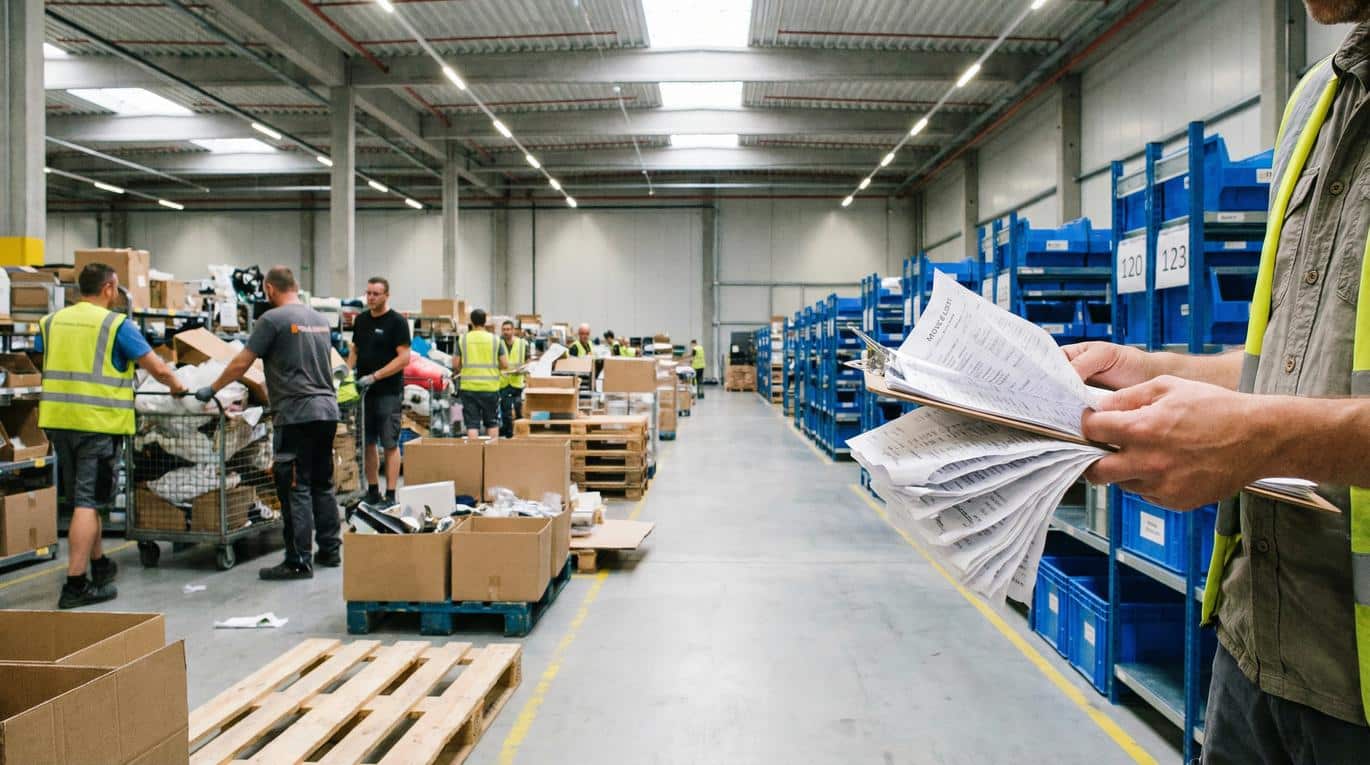
A poorly designed warehouse layout is perhaps the most fundamental mistake that hampers productivity. Many warehouses evolve organically over time without strategic planning, leading to several issues:
- Excessive travel time: When frequently picked items are stored far from packing stations, pickers waste valuable time moving through the warehouse. Studies show that up to 50% of picker time is spent traveling between locations.
- Improper slotting: Failing to position items based on pick frequency, size, and weight creates inefficiencies in the picking process. Optimized slotting can reduce travel distance by 40-70%. Proper inventory replenishment strategies complement good slotting.
- Wasted vertical space: Many warehouses utilize only 60-70% of available vertical space, leading to unnecessary footprint expansion.
- Congested aisles: Narrow pathways that can’t accommodate equipment or multiple workers simultaneously create bottlenecks, reducing productivity by up to 30% during peak periods.
EXPERT INSIGHT: “The most common layout mistake I see is failing to re-evaluate slotting as SKU velocities change over time. A layout that was perfectly optimized a year ago might be causing significant inefficiencies today.” — Maria Rodriguez, Senior Operations Consultant at Logistics Excellence Partners
Solution: Conduct a comprehensive layout analysis, implement ABC analysis (storing fastest-moving items in the most accessible locations), and create a slotting strategy that optimizes both horizontal and vertical space.
Success Story: An e-commerce retailer with 50,000 SKUs implemented dynamic slotting based on seasonal demand patterns, reducing picker travel distance by 42% and increasing units picked per hour by 31%.
2. Inadequate Inventory Management Systems
Manual inventory tracking or outdated systems create numerous productivity drains:
- Inventory inaccuracy: The average warehouse has an inventory accuracy rate of only 63-68% without proper systems. When physical inventory doesn’t match system records, it leads to pick errors, stockouts, and excess inventory.
- Lack of real-time visibility: Without current inventory data, decision-making becomes reactive rather than proactive. Real-time inventory management can reduce out-of-stocks by up to 80%.
- Poor forecasting capabilities: Inability to predict inventory needs leads to rushed orders and inefficient labor allocation. Businesses with advanced forecasting reduce excess inventory by 20-30%.
- Time-consuming cycle counts: Traditional cycle counting methods can consume up to 200-500 labor hours annually for medium-sized warehouses.
Solution: Implement a robust Warehouse Management System (WMS) with real-time inventory tracking, predictive analytics, and cycle counting capabilities. Consider RFID or barcode systems to improve accuracy.
Decision Framework: Is Your Inventory System Due for an Upgrade?
| Warning Sign | Impact | Potential Solution |
|---|---|---|
| Frequent stockouts despite high inventory levels | Lost sales, expedited shipping costs | Implement real-time inventory tracking |
| Cycle counts take >2 days to complete | Delayed decision-making, excess labor | RFID or automated cycle counting systems |
| Order fill rate <98% | Customer dissatisfaction, lost business | Integrated WMS with error detection |
| >10% of inventory is “lost” annually | Working capital tied up, space utilization issues | Barcode scanning and validation at all touchpoints |
3. Suboptimal Order Picking Processes
Order picking typically accounts for up to 55% of warehouse operating costs, making it a critical area for optimization:
- Single-order picking: Having pickers complete one order at a time is inefficient for operations with many small orders. Batch picking can improve productivity by 30-65% for multi-line orders.
- Paper-based picking systems: Relying on printed pick lists slows down operations and increases error rates to 1-3%. Digital picking solutions can reduce errors to less than 0.1%.
- Unbalanced workload distribution: When certain pickers are consistently overloaded while others remain underutilized, overall productivity suffers. Optimal labor balancing can increase picking efficiency by 15-25%.
- Lack of defined picking methodology: Without a standardized approach, pickers develop inconsistent habits. Standardized methods can reduce training time by up to 60%.
Solution: Implement batch picking, zone picking, or wave picking depending on your order profile. Adopt pick-to-light, voice picking, or mobile scanning technologies to increase accuracy and speed.
Picking Method Comparison:
Single Order Picking: 50-100 lines per person per hour
Batch Picking: 150-200 lines per person per hour
Zone Picking: 175-275 lines per person per hour
Pick-to-Light Systems: 300-500 lines per person per hour
4. Insufficient Labor Management and Training
The human element remains critical in warehouse operations:
- Inadequate onboarding: New employees without proper training take longer to reach optimal productivity levels. Comprehensive training programs can reduce the time to productivity by 30-40%.
- Lack of performance metrics: Without clear KPIs, it’s difficult to identify improvement opportunities or recognize top performers. Warehouses with robust performance measurement systems report 10-15% higher productivity.
- High turnover rates: The warehouse industry faces an average turnover rate of 36%, with each replacement costing 25-150% of the employee’s annual salary.
- Poor ergonomics: Workstations and processes that ignore human factors cause fatigue and injuries. OSHA reports that warehousing has an injury rate of 5.1 per 100 workers, 50% higher than the national average for private industry.
INDUSTRY POLL: In a 2023 survey of warehouse managers, 78% identified “finding and retaining qualified workers” as their top operational challenge, yet only 31% had a formal employee development program in place.
Solution: Develop comprehensive training programs, implement performance metrics with regular feedback, create career advancement opportunities, and design ergonomic workstations that reduce physical strain.
Case Study: Reducing Turnover Through Training Excellence
A mid-sized distribution center reduced its annual turnover rate from 42% to 17% by implementing a three-tiered training program that included mentorship, skill certification, and clear advancement paths. The program cost $75,000 to implement but saved over $300,000 in annual recruitment and onboarding costs while improving overall productivity by 22%.
5. Neglecting Technology Integration
In the age of Industry 4.0, technological hesitancy creates significant competitive disadvantages:
- Manual data entry: Organizations spend an average of $180 per employee per week on manual data entry tasks, with error rates of 1-3%.
- Disconnected systems: When your WMS doesn’t communicate with your ERP or transportation management system, information silos form. Integrated systems reduce order processing time by 20-35%.
- Resistance to automation: According to McKinsey, warehouses that implement automation see productivity improvements of 25-85% depending on the technologies deployed.
- Outdated hardware: Slow computers, scanners with poor battery life, or unreliable Wi-Fi create constant operational friction. Mobile device failures cost an average of 75 minutes of productivity per incident.
Solution: Evaluate and implement appropriate technology solutions based on ROI analysis. Focus on integration capabilities, scalability, and user-friendliness when selecting new systems.
TECH SPOTLIGHT: Emerging Technologies Reshaping Warehouse Operations
- Autonomous Mobile Robots (AMRs): Reduce travel time by 40-60% and increase picking productivity by 2-3x
- Computer Vision and AI: Improve quality control accuracy by 80-95% while reducing inspection time
- Digital Twins: Enable scenario testing that can optimize layout and workflow without disrupting operations
- Predictive Analytics: Reduce stockouts by up to 65% through dynamic inventory management
6. Ineffective Receiving Procedures
Productivity problems often begin at the receiving dock:
- Unscheduled deliveries: When trucks arrive without appointment times, labor cannot be allocated efficiently. Scheduled deliveries can reduce dock processing time by 40-60%.
- Incomplete verification: Rushing through receipt verification leads to inventory discrepancies downstream. Thorough verification can reduce inventory discrepancies by 80%.
- Delayed putaway: Items that remain in receiving areas create congestion and increase the risk of damage. Studies show that immediate putaway can reduce damage rates by 20-25%.
- Poor vendor compliance: Inconsistent labeling or packaging from suppliers complicates the receiving process. Strong vendor compliance programs can reduce receiving labor by 15-25%.
Solution: Implement dock scheduling systems, standardize receiving procedures, establish vendor compliance programs, and prioritize immediate putaway to maintain dock fluidity.
CHECKLIST: Building an Effective Vendor Compliance Program
- [ ] Develop clear packaging and labeling requirements
- [ ] Create a vendor scorecard system with performance metrics
- [ ] Establish penalties for non-compliance and incentives for excellence
- [ ] Provide an accessible vendor portal with requirements documentation
- [ ] Implement regular vendor performance reviews
- [ ] Develop collaborative improvement plans for underperforming vendors
7. Disorganized Packing and Shipping Operations
The final steps in order fulfillment offer significant optimization opportunities:
- Inconsistent packaging selection: Using inappropriate box sizes wastes materials and increases shipping costs. Dimensional weight optimization can reduce shipping costs by 15-30%.
- Cluttered packing stations: When supplies are disorganized, packing efficiency suffers. Organized packing stations following 5S principles increase throughput by 15-20%.
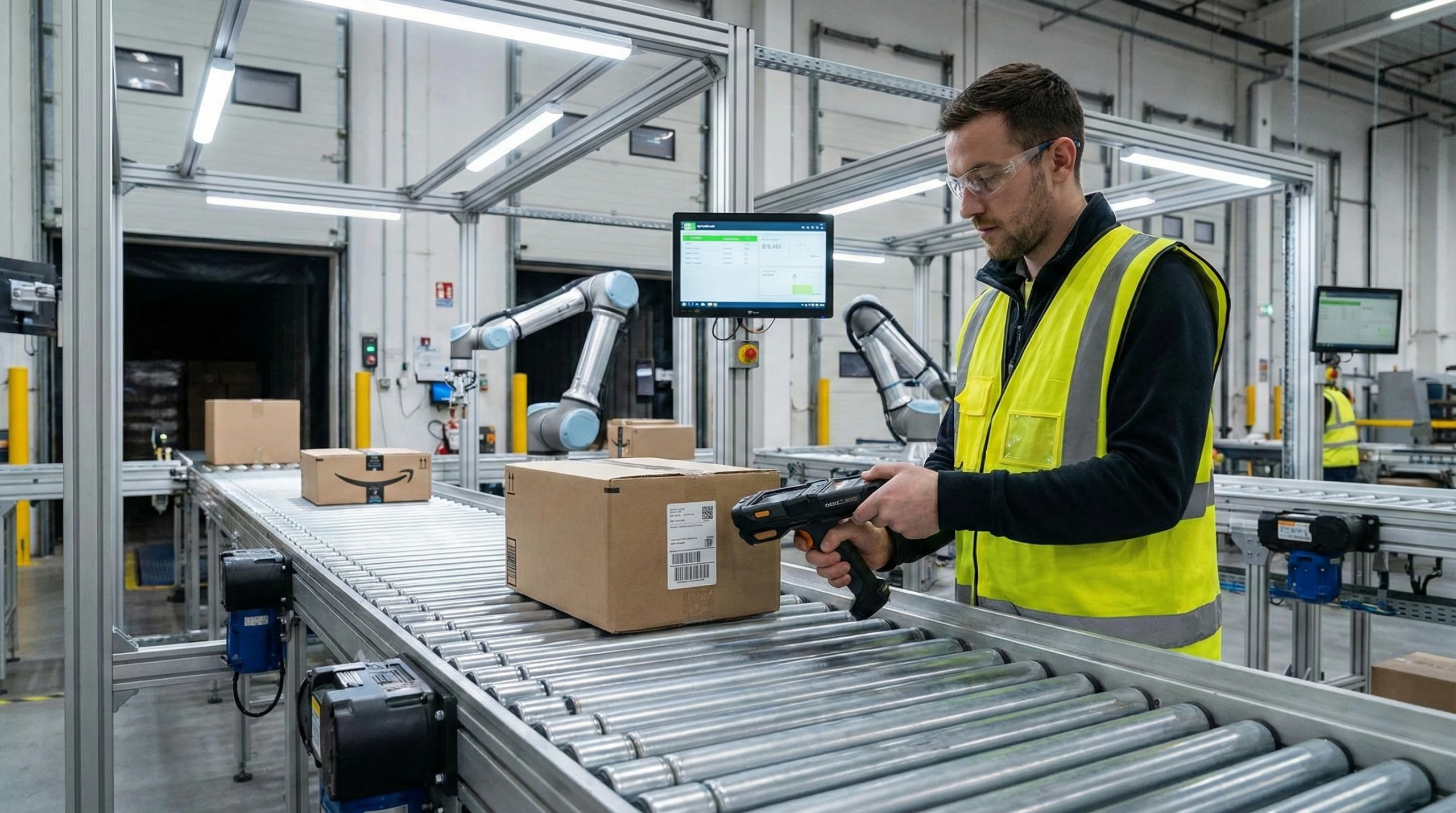
- Manual shipping processes: Handwritten labels or manually entered tracking information slow down operations. Automated shipping processes reduce labor costs by 40-65% and errors by 90%.
- Poor carrier selection: Failing to optimize carrier choice based on delivery requirements and costs impacts both expenses and customer satisfaction. Multi-carrier shipping strategies save 8-15% on transportation costs.
QUICK TIP: The 5S methodology (Sort, Set in order, Shine, Standardize, Sustain) applied to packing stations can increase throughput by up to 20% without any additional technology investment.
Solution: Implement automated box selection systems, organize packing stations following 5S principles, integrate shipping software with your WMS, and regularly analyze carrier performance.
8. Overlooking Return Processing Efficiency
Returns management is often an afterthought but can consume significant resources:
- Undefined return procedures: Without clear processes, returns pile up and reintegration into inventory is delayed. The average return takes 1.5-2x longer to process than an outbound order.
- Inadequate return tracking: Poor visibility into the returns pipeline makes labor planning difficult. Returns account for 8-10% of total sales in retail, with processing costs 2-3 times that of outbound shipments.
- Inefficient quality inspection: Delays in determining product disposition tie up valuable warehouse space. The average returned item loses 30% of its value during the returns process.
- Isolated returns operation: Treating returns as separate from regular operations creates inefficiencies. Integrated returns processing reduces handling time by 25-40%.
Solution: Develop streamlined return procedures, implement return tracking systems, establish clear quality inspection guidelines, and integrate returns processing into regular warehouse operations.
ROI CALCULATOR: Returns Processing Improvement
For a warehouse processing 1,000 returns monthly:
- Average processing time: 15 minutes per return
- Labor cost: $20/hour
- Current monthly labor cost: $5,000
- With 30% efficiency improvement: $1,500 monthly savings
- Annual savings: $18,000
- Typical investment in returns management software: $25,000-$40,000
- Expected payback period: 16-26 months
9. Poor Workload Planning and Demand Forecasting
Reactive rather than proactive operations management creates productivity challenges:
- Unpredictable labor requirements: When staffing doesn’t align with workload, either overtime or idle time results. Companies with advanced labor planning reduce overtime costs by 20-30%.
- Failure to anticipate seasonal fluctuations: Being unprepared for predictable volume changes creates unnecessary stress on systems and staff. Seasonal volume can fluctuate by 30-400% depending on industry.
- Last-minute rush orders: Accommodating urgent orders disrupts planned workflows. Rush orders typically cost 20-35% more to process than standard orders.
- Inadequate communication with sales and marketing: When warehouse operations are unaware of promotions or campaigns, they can’t prepare accordingly. Promotional activities can spike order volume by 50-300%.
Solution: Implement advanced forecasting tools, develop flexible staffing models, establish cross-departmental communication protocols, and create contingency plans for peak periods.
EXPERT STRATEGY: The 3-Tier Labor Planning Approach
- Core Team (60-70%): Full-time employees with comprehensive training
- Flex Team (20-30%): Part-time or variable-hour employees with targeted training
- Peak Support (10-15%): Temporary workers or outsourced services for seasonal peaks
This model has helped leading distributors reduce labor costs by 12-18% while maintaining service levels during demand fluctuations.
10. Neglecting Continuous Improvement Processes
Warehouse operations that remain static inevitably fall behind:
- Absence of performance measurement: Without tracking key metrics, improvement opportunities remain invisible. Warehouses with formal improvement programs report 8-12% year-over-year productivity gains.
- Resistance to change: Maintaining “the way we’ve always done it” mentality prevents innovation. According to Gartner, 85% of supply chain organizations face internal resistance when implementing digital transformation initiatives.
- Failure to capture employee input: Frontline workers often have valuable insights that go unheard. Companies with active employee suggestion programs report 22% higher productivity.
- Lack of industry benchmarking: Without external comparisons, it’s difficult to assess true performance levels. Top-performing warehouses operate at 15-20% higher efficiency than industry averages.
Solution: Establish a formal continuous improvement program, regularly review key performance indicators, create channels for employee suggestions, and participate in industry benchmarking initiatives.
THE WAREHOUSE EXCELLENCE SCORECARD
Rate your operation on these key performance indicators:
- Order accuracy (industry benchmark: 99.8%)
- On-time shipping (industry benchmark: 98.5%)
- Units per labor hour (varies by industry)
- Inventory accuracy (industry benchmark: 99.5%)
- Order cycle time (industry benchmark: <24 hours)
- Space utilization (industry benchmark: >85%)
- Safety incidents (industry benchmark: <3 per 100 FTEs annually)
- Employee turnover (industry benchmark: <20% annually)

Key Takeaways
- Layout optimization can reduce travel time by 40-50%, creating immediate productivity gains
- Real-time inventory management improves accuracy by 25-35% and reduces stockouts by up to 80%
- Modern picking methodologies increase productivity by 30-200% depending on current processes
- Comprehensive training programs reduce turnover by 40-60% and improve productivity by 20-30%
- Integrated technology systems eliminate data entry errors and improve decision-making speed
- Standardized receiving procedures reduce processing time by 30-50% and improve inventory accuracy
- Efficient packing operations reduce labor costs by 15-25% and shipping costs by 10-30%
- Streamlined returns processing can transform a cost center into a value-recovery opportunity
- Proactive labor planning reduces overtime costs by 20-30% while maintaining service levels
- Continuous improvement culture delivers 8-12% productivity gains year-over-year
Conclusion
Addressing these common fulfillment mistakes requires a strategic approach that balances short-term fixes with long-term improvements. Start by identifying the issues most significantly impacting your operation, prioritize solutions based on potential ROI, and implement changes methodically while measuring results.
Remember that warehouse productivity optimization is not a one-time project but an ongoing process. By systematically eliminating these common mistakes, you’ll create a more efficient, cost-effective operation capable of meeting evolving customer expectations and maintaining competitive advantage in today’s demanding marketplace.
By continually refining your warehouse operations, you’re not just fixing mistakes—you’re building a foundation for sustainable growth and excellence in fulfillment.
About the Author: [Author Name] is a supply chain consultant with over 15 years of experience optimizing warehouse operations for global retailers and distributors. They have led productivity improvement initiatives that have delivered over $50 million in operational savings.
Sources
- Warehouse Education and Research Council (WERC), “DC Measures Annual Industry Report,” 2023.
- Georgia Tech Supply Chain & Logistics Institute, “Warehouse Optimization Study: Impact of Slotting Methodologies on Operational Efficiency,” 2022.
- Modern Materials Handling, “Annual Warehouse/DC Equipment Survey,” 2024.
- GS1 and Auburn University RFID Lab, “Measuring the Impact of RFID in Retail Inventory Accuracy,” 2023.
- Tompkins, James A., “Warehouse Management Handbook,” Tompkins Press, 2022.
- Manhattan Associates, “The ROI of Advanced Order Picking Technologies,” White Paper, 2023.
- Bureau of Labor Statistics (BLS), “Job Openings and Labor Turnover Survey,” 2024.
- Occupational Safety and Health Administration (OSHA), “Warehousing Industry Statistics and Injury Rates,” 2023.
- International Data Corporation (IDC), “The Cost of Manual Processes in Supply Chain Operations,” Research Report, 2023.
- McKinsey Global Institute, “Automation in Warehousing: Capturing the Opportunity,” 2024.
- National Retail Federation (NRF), “Consumer Returns in the Retail Industry,” Annual Report, 2024.
- Reverse Logistics Association and UPS, “The Impact of Returns on Retail Operations,” Joint Study, 2023.
- Peerless Research Group, “Warehouse Operations Productivity Survey,” 2024.
- Supply Chain Dive, “Dimensional Weight Optimization in the E-commerce Era,” Industry Analysis, 2023.
- Gartner, “Digital Transformation in Supply Chain Operations,” Research Report, 2024.
- Logistics Management, “Annual Warehouse and Distribution Center Survey,” 2024.
- Supply Chain Brain, “Labor Management and Planning in Distribution Centers,” Research Brief, 2023.
- Aberdeen Group, “The ROI of Real-time Inventory Visibility,” Research Report, 2023.
- Material Handling Industry (MHI), “Annual Industry Report: Innovation Driven Resilience,” 2024.
- Zebra Technologies, “Warehousing Vision Study,” 2023.
Frequently Asked Questions
What is the most common fulfillment mistake in warehouses?
Inadequate inventory management is the most widespread issue, with average warehouses achieving only 63 to 68 percent inventory accuracy without proper systems. This single problem cascades into pick errors, stockouts, excess ordering, and poor customer satisfaction across the entire operation.
How much can warehouse productivity improve by fixing fulfillment mistakes?
Improvements vary by area, but common gains include 30 to 65 percent better picking productivity through optimized methods, 15 to 30 percent labor cost reduction through better management, and 40 to 70 percent less travel distance through improved slotting. Combined, these improvements can transform overall warehouse throughput.
What is the first step to improving warehouse fulfillment?
Start by measuring current performance with accurate KPIs: inventory accuracy, pick rate, order accuracy, and on-time shipping. This baseline reveals which mistakes are costing the most so you can prioritize improvements where they will have the greatest impact on productivity and customer satisfaction.
How does a WMS help prevent fulfillment mistakes?
A warehouse management system provides real-time inventory visibility, directed work processes, barcode verification at each step, and performance analytics. It replaces manual tracking and tribal knowledge with standardized workflows that reduce errors, improve accuracy, and give managers data to drive continuous improvement.
Should small warehouses invest in automation to fix fulfillment issues?
Not necessarily. Many fulfillment mistakes stem from process and layout issues rather than lack of technology. Start with proper slotting, standardized workflows, and a WMS for visibility and control. Automation delivers the best return when layered on top of well-designed processes rather than used to compensate for broken ones.