










Just in Time vs Just in Case Inventory Management
By Daryl Grove · March 30, 2022 · 4 min read

3 minutes
The COVID pandemic brought a lot of changes along with it. One of these changes, is how much inventory businesses are deciding to keep on hand. Just-in-Time inventory management features might have worked well before, but after a global pandemic and supply chain shortages, what is the best method for the future? How do you address supply chain uncertainty?
What does “Just in Time” mean?
Several of the lean manufacturing practices we used today, were developed after World War II by Toyota. Instead of making large quantities of products at a time they focused on a production rate that matched demand. It also made sense, when it came to defects or design changes, where excess parts inventory would have to be revised or abandoned, so they did not end up with a lot of unusable parts. “In 1984, General Motors had 3,500 suppliers compared to 225 for Toyota, and carried five days of inventories valued in 1982 dollars at $5 billion. Toyota, in contrast, had perfected a system in which parts for its assembly lines might be delivered daily or several times a day.” By reducing the quantity of products being made daily it cut down on production costs – employment costs, parts, and storage of those additional parts and final products.
What does “Just in Case” mean?
The Just in Case model is where businesses carry a larger inventory on hand, stocking more than they need so they have extra if there is a spike in demand or to combat inventory shortages. Although this model helps to ensure you have the products on hand when you need them, it also has its risks. It costs more money as you are carrying extra inventory, requires more warehouse space and a potential inventory overload.
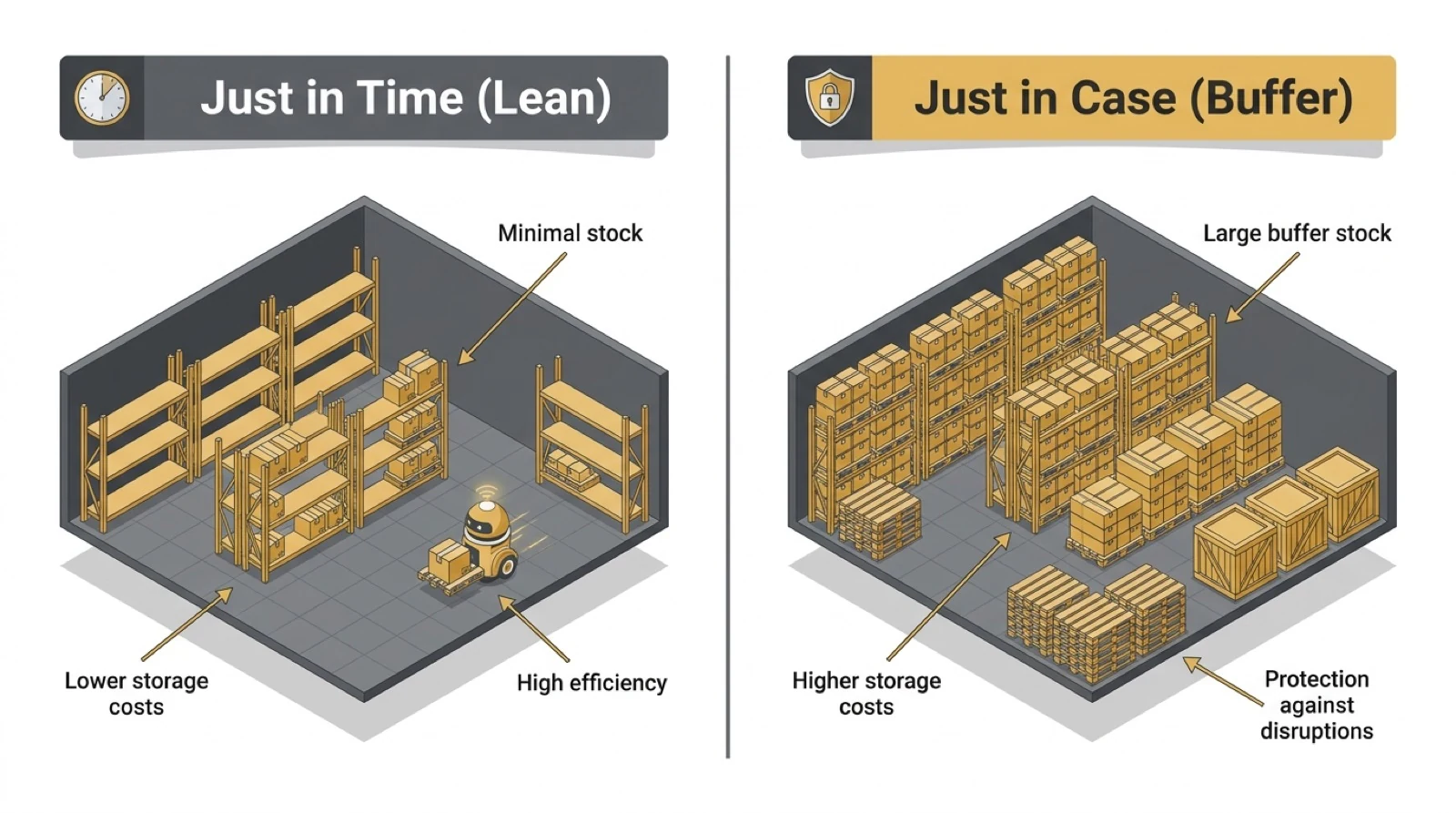
Which one is Better?
With the supply chain delays we have seen in the past and continue to see, inventory arriving late, holding up production lines and delaying when items can be shipped to the customer, a Just in Case model might be the safer choice. Carrying extra inventory, does not necessarily mean you should stock up on everything. Look at your order history, find the items that continue to be best sellers over the years, have extra stock of those items. Also, review your history for seasonal trends to know when to start stocking up on items for a particular holiday or season (summer, winter, etc.). And include your warehousing partners in the review and decisions. As the saying goes, you’re only as good as your weakest link. 3PLs are very important in the supply chain and will offer the flexibility to handle the varying inventory requirements.
Do you need help streamlining your processes or implementing a Just in Case inventory model? Contact Cadre Technologies today!
Frequently Asked Questions
What are the main disadvantages of just-in-time inventory management?
Just-in-time inventory management is vulnerable to supply chain disruptions, can cause production delays when deliveries are late, and offers little buffer for unexpected demand spikes. The COVID pandemic highlighted these risks when many companies faced shortages and couldn’t meet customer needs due to their lean inventory approach.
How much extra inventory should I keep with just-in-case approach?
The amount of extra inventory depends on your product demand patterns, supplier reliability, and cash flow capacity. Focus on stocking 20-50% additional inventory for best-selling items and products with long lead times. Analyze your sales history and seasonal trends to determine optimal safety stock levels for each product category.
Can I combine just-in-time and just-in-case inventory strategies?
Yes, many businesses use a hybrid approach that applies different strategies to different products. Use just-in-case for critical, high-demand items and products with unreliable suppliers, while maintaining just-in-time for low-volume or easily replaceable items. This balanced approach optimizes both cost efficiency and supply chain resilience.
What factors should I consider when choosing an inventory management strategy?
Consider your supplier reliability, lead times, demand variability, cash flow, storage capacity, and industry seasonality. Also evaluate your customers’ tolerance for stockouts and your ability to expedite orders. Companies in volatile markets or with unreliable suppliers typically benefit more from just-in-case approaches.
How do I calculate the cost impact of switching inventory strategies?
Compare carrying costs (storage, insurance, obsolescence) of extra inventory against potential lost sales and rush order expenses. Factor in warehouse space costs, working capital requirements, and customer satisfaction impacts. Many companies find the security of just-in-case inventory outweighs the additional carrying costs, especially for critical products.