Guide to Slotting in Warehouse Management
Reading Time: 6 minutes
Effective warehouse management is a cornerstone of successful fulfillment operations, and a critical part of this for many businesses is warehouse slotting. As a warehouse professional, mastering your warehouse slotting strategy can drastically improve efficiency, increase storage space, and boost overall productivity. This article aims to provide an in-depth understanding of slotting and its fundamental role in inventory management features and fulfillment centers.
Understanding Warehouse Slotting and Its Impact on Inventory Management
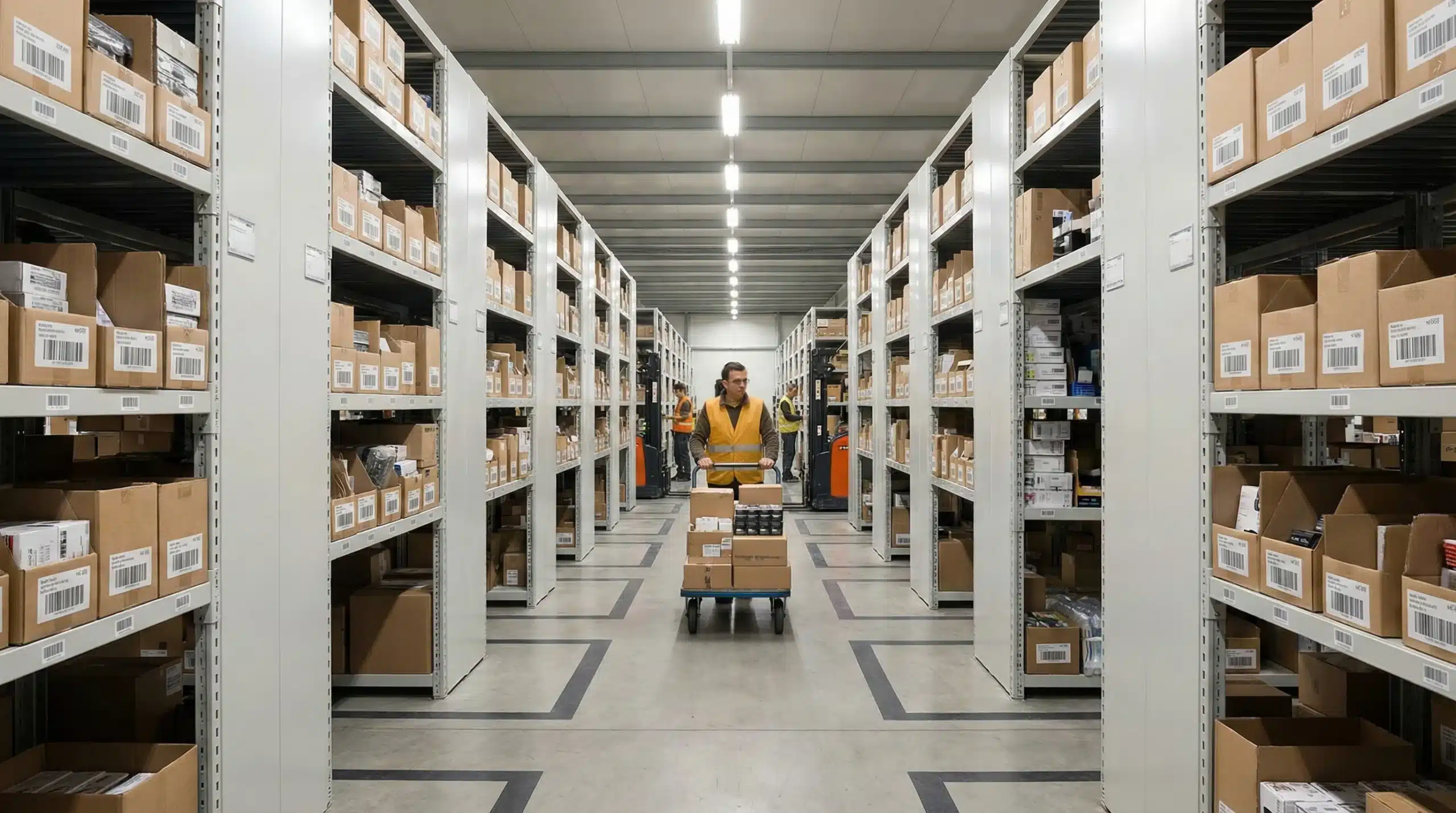
Warehouse slotting refers to the strategic positioning of goods within a warehouse or distribution center. It’s a process that warehouse operators, managers, and 3PLs need to master in order to maximize efficiency.
This process is critical to efficient order picking, effective inventory storage, and improved worker safety within the facility. It requires careful consideration of factors such as product demand, size, weight, and handling characteristics. The idea is to place the right product in the right spot at the optimal time.
For both eCommerce businesses operating their own warehouses and fulfillment providers servicing a variety of clients, a well-crafted warehouse slotting plan can significantly reduce operational and fulfillment costs. Whether you’re working in a small eCommerce warehouse or a large distribution center, a strategically designed slotting system is essential.
The ultimate goal of warehouse slotting is to streamline warehouse operations, making the order fulfillment process more efficient and seamless. Therefore, understanding and effectively implementing this strategy can have a profound impact on the productivity and profitability of your warehouse or fulfillment center.
Smarter Warehouse Management Starts Here
Cadre WMS delivers real-time visibility, automated workflows, and seamless ERP integration for warehouses of every size.
Request a Demo
The Benefits of Effective Slotting
A successful slotting strategy has a multitude of benefits:
- Improved Order Picking Efficiency: Effective slotting reduces the distance that workers need to travel to pick orders, leading to faster order fulfillment and increased productivity.
- Increased Storage Density: By optimizing space, slotting increases storage capacity within the existing warehouse footprint. This helps to avoid the need for warehouse expansion or additional storage facilities, thus saving costs.
- Enhanced Worker Safety: Proper slotting reduces the risk of accidents by ensuring heavier items are stored at lower, safer locations, and fast-moving items are placed in easily accessible areas. This results in a safer work environment and can decrease workers’ compensation claims.
- Cost Savings: Efficient slotting can dramatically reduce operational costs by cutting down on the labor time for picking orders, reducing warehouse space requirements, and minimizing product damage and spoilage.
Challenges in Implementing an Effective Warehouse Slotting Strategy
Despite its numerous benefits, warehouse slotting isn’t without challenges. As inventory expands and customer demand fluctuates, maintaining an optimal warehouse slotting process can be complex. Seasonal products introduce another layer of complexity, requiring temporary re-slotting to accommodate high-demand items. Moreover, each warehouse’s layout is unique, and the physical constraints of the facility can make warehouse slotting a challenging task.
Additionally, without the proper technology and systems in place, managing a slotting strategy can be a laborious and time-consuming process, often requiring manual data collection and analysis.
The Process of Effective Warehouse Slotting
Designing and implementing a successful warehouse slotting strategy involves several crucial steps, including macro slotting and micro slotting:
- Analyzing Product Data: Effective slotting begins with a thorough slotting analysis of product data. This involves considering factors such as product dimensions, weight, sales volume, SKU pick velocity, and compatibility with other products.
- Designing the Warehouse Layout: Macro slotting refers to the strategic layout design of the entire warehouse. The goal is to place each product in a location that maximizes picking efficiency and space utilization while minimizing retrieval time.
- Implementing the Slotting Plan: Once the layout is designed, the next step is the physical relocation of products. Micro slotting comes into play here, where products are stored at an item level and storage medium is selected according to the item’s characteristics and sales velocity.
- Reviewing and Updating the Slotting Strategy: As demand patterns change and new products are introduced, your slotting strategy needs to be reviewed and adjusted accordingly. SKU velocity, sales volume, and even seasonal changes should be critical considerations in this process.
By applying these basic slotting strategies, warehouse managers can make better use of available and even unused warehouse space, reduce labor costs, and ultimately enhance operational efficiency.
Integrating Technology in Slotting
Modern technology can greatly facilitate the slotting process. Warehouse Management Systems (WMS) with slotting optimization can automate much of the process, minimizing the need for manual data collection and analysis. These systems can consider thousands of SKUs, analyze picking trends, and automatically generate the most efficient slotting layout.
Furthermore, advancements in AI and Machine Learning offer even more potential for slotting optimization in the near future. Predictive analytics can anticipate changes in demand and suggest proactive re-slotting to prepare for future trends. This level of sophisticated analysis can significantly enhance the efficiency and effectiveness of a slotting strategy.

Warehouse Slotting Best Practices
To fully capitalize on the benefits of warehouse slotting, it’s important to follow some industry-proven best practices:
- Regular Review and Updates: A slotting strategy is not a ‘set it and forget it’ operation. Changes in product demand, the introduction of new SKUs, and seasonal fluctuations make it necessary to regularly review and update your warehouse slotting strategies.
- Consider Future Growth: Design your warehouse with growth in mind. This is especially critical if you’re operating in a smaller warehouse or fulfillment center and anticipating growth, or if you’re planning to move into a larger warehouse. While current demands are critical, it’s also important to leave some room for future expansion.
- Balancing Frequency and Accessibility: Warehouse slotting optimization involves balancing frequency and accessibility. Products with higher pick frequency (velocity) should be placed in the most accessible locations, such as at waist level and closer to dispatch areas, or near the packing station or loading dock if it makes sense. This not only speeds up the picking process but also reduces warehouse workers’ fatigue and prevents traffic jams in the same area.
- Maintain Cleanliness and Organization: A well-organized warehouse is vital for efficient operations. Regular cleaning schedules, clear labeling of locations, and maintenance of clear aisles all contribute to better warehouse organization and more efficient slotwarehouse inventory management guide.
Following these warehouse slotting best practices can ensure effective slotting and maximize your fulfillment center’s efficiency.
How Cadre Technologies’ Warehouse Management System Can Enhance Your Warehouse Slotting Strategy
Cadre Technologies, a leader in warehouse management system (WMS) solutions, offers an advanced warehouse slotting capabilities.. Our software, designed for modern fulfillment operations, helps in organizing inventory, automating data collection and analysis, and making better use of your entire warehouse, from floor space to full pallet storage. This can help you manage inventory more efficiently, reduce fulfillment costs, and save money.
Conclusion
In conclusion, effective slotting is integral to efficient warehouse management. Despite its complexities, with a strategic approach and the right technology, it’s possible to create a slotting strategy that maximizes efficiency, increases storage density, enhances worker safety, and reduces costs. As a warehouse professional, understanding and implementing effective slotting practices can dramatically improve your operational success.
We invite you to experience the transformative power of efficient warehouse slotting with our advanced Warehouse Management System software. Contact Cadre Technologies today for a free demo and discover how our system can help you achieve a well-organized warehouse, streamline your fulfillment operations, and reduce shipping errors.
Frequently Asked Questions
How often should warehouse slotting strategies be reviewed and updated?
Warehouse slotting strategies should be reviewed quarterly at minimum, with more frequent updates during peak seasons or when introducing new products. Dynamic businesses may need monthly reviews to accommodate changing demand patterns, new SKUs, and seasonal fluctuations. Regular monitoring of pick velocity and sales data helps determine when adjustments are necessary.
What’s the difference between macro slotting and micro slotting?
Macro slotting involves designing the overall warehouse layout and strategic placement of product categories across zones. Micro slotting focuses on item-level placement within specific locations, determining exact storage positions based on individual SKU characteristics like velocity and dimensions. Both work together to optimize the entire warehouse operation.
Can small warehouses benefit from slotting optimization as much as large facilities?
Yes, small warehouses can see proportionally greater benefits from slotting optimization. Limited space makes efficient placement even more critical for maximizing storage density and picking efficiency. Small operations can implement basic slotting principles without complex technology, focusing on high-velocity items and logical product groupings to achieve significant improvements.
What warehouse data is most important for creating an effective slotting strategy?
The most critical data includes SKU pick velocity, product dimensions and weight, sales volume trends, and product compatibility. Additional valuable metrics include seasonal demand patterns, order frequency, storage requirements, and handling characteristics. Accurate, up-to-date data is essential for making informed slotting decisions that improve operational efficiency.
How does poor slotting impact warehouse labor costs?
Poor slotting significantly increases labor costs through longer pick times, excessive travel distances, and worker fatigue. Workers may spend up to 60% more time picking orders when products are poorly positioned. Additionally, improper placement of heavy items can lead to injuries, increasing workers’ compensation costs and reducing productivity.