









White Paper: Why Wave Pre-Planning Will Improve Your Warehouse Management
By Daryl Grove · June 7, 2022 · 5 min read

Warehouse distribution centers tend to be more successful if they are able to efficiently handle orders of any size, any volume, and from any source. Their competitive edge and higher profit margins come from their efforts to fulfill orders as quickly as possible, at the cheapest cost for the consumer.
Challenging that formula are increased client expectations that soon may require even faster processing. Ecommerce has made time sensitivity a priority issue for warehouse managers. Another is the ongoing labor shortage in the supply chain. High turnover rates and increased onboarding periods have created a talent gap at the warehouse level which has the potential to create a significant drag on order fulfillment. Add to this challenge the ever-changing and costly shipping landscape, and the problem even becomes more complex.
Wave pre-planning, also known as waving, is your best defense against all of these challenges and represents what is often regarded as the forgotten step in supply chain management. Waving gives companies the ability to establish a game plan for the orders before they are delivered to the warehouse floor for picking.
Here are 3 Ways Focusing on Waving Will Keep Your Operation Competitive Despite the Ongoing Challenges in the Industry:
1. Waving Saves Time
Waving is a value-added way to automate the grouping of orders by different criteria: level of priority, destination, customer, product attributes, or the time of day or day of the week the orders need to be picked for shipping. Many other criteria may be involved but the bottom line is preplanning done by waving has a huge effect on warehouse productivity.
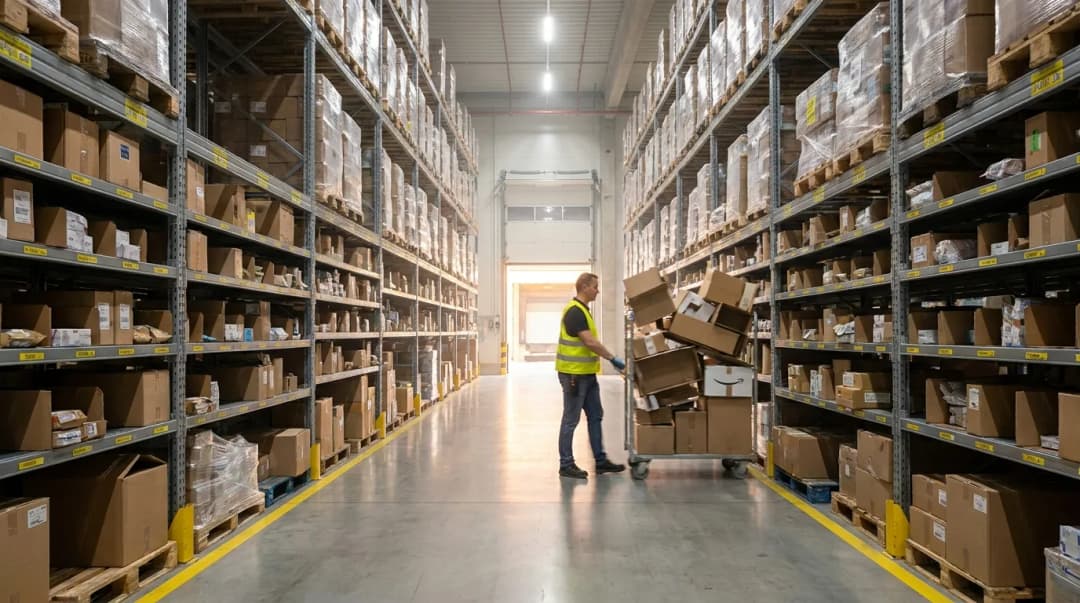
There are a number of reasons why this saves time. Since picking can become the most intensive labor activity in your warehouse — taking up between five minutes to two hours for one pick — waving can reduce the workload by grouping similar orders for efficient processing. This becomes most helpful for temporary workers who may not be familiar with every corner of your warehouse, not to mention your products, customers, etc.
Secondly, waving shortens the time required to organize each grouping. If there are multiple orders for Walmart, for example, waving helps group them into a single pick for shipping. All forms of picking — Multi-order, zone, cluster, and pick and pass — all require proper waving to be effective.
Since picking can become the most intensive labor activity in your warehouse— taking up between five minutes to two hours for one pick — waving can reduce the workload by grouping similar orders for efficient processing
2. Waving Enables Efficiency
Preplanning your picks according to shipping time will create efficiency right off the bat. The reason for this is logical: If one order needs picking today and another order doesn’t need picking for two days, waving gets the higher priority order up front instead of wasting resources for an order where time is less of an issue. Today, this technique may even apply to a 24-hour, three-shifts-a-day warehouse. The point is the same.
Wave processing makes picking manageable by sequencing picks in groups according to your criteria of shipping requirements so the activity on your warehouse floor is balanced accordingly. Better yet is how wave processing can go further in allocating the extra time required for certain products. One example is how waving enables pickers to pick the same SKU all at once for pre-labeling of thousands of consumer orders versus a multi-SKU pick, which involves picking a larger order for a retail warehouse. Again, the key is grouping identical orders together!
3. Waving Strengthens Accuracy
Nothing spells more trouble for your warehouse operation than a shipment that contains incorrect items. Wave processing guards against that possibility by making sure your workers are confined only to areas in your warehouse dictated by your orders. If your temporary workers are trained to pick only one type of order, this keeps them focused and makes training easier and less costly.
Calibrating orders by only a certain kind of pick will not just shorten the time needed to get the items shipped, but it will also ensure your packages are picked the way your clients require. This not only increases your level of service, but limits warehouse costs at the same time.
What are your warehouse management needs?
Visit us at www.cadretech.com or call +1 (303) 217-7030 to learn more about our warehouse management systems for 3rd Party Logistics (3PL), Manufacturers and Distributors and to set up a demo.
Frequently Asked Questions
What warehouse management system features are needed to implement wave pre-planning?
Effective wave pre-planning requires a WMS with automated order grouping capabilities, customizable sorting criteria, and real-time inventory visibility. The system should support multiple picking methods and allow configuration of priority rules based on shipping deadlines, destinations, and customer requirements. Integration with shipping carriers and labeling systems is also essential for seamless execution.
How do you determine the optimal wave size for your warehouse?
Optimal wave size depends on your warehouse layout, staff capacity, and order volume patterns. Generally, waves should contain enough orders to keep pickers busy for 2-4 hours without overwhelming them. Consider factors like pick density, travel time between locations, and your team’s experience level. Start with smaller waves and gradually increase size as efficiency improves.
What common mistakes should warehouses avoid when implementing wave planning?
Common wave planning mistakes include creating waves that are too large or complex, failing to account for inventory availability before releasing waves, and not training staff on new procedures. Avoid mixing incompatible order types in single waves and ensure your WMS has accurate real-time data. Poor timing of wave releases can also create bottlenecks and reduce overall efficiency.
When is the best time to release waves during warehouse operations?
Wave release timing should align with your shipping cutoff times and staff schedules. Most warehouses release morning waves 2-3 hours before shipping deadlines to allow completion time. Consider releasing smaller waves throughout the day rather than one large wave to maintain steady workflow. Factor in peak order volumes, staff breaks, and any recurring operational constraints when scheduling releases.
What metrics should warehouses track to measure wave planning success?
Key wave planning metrics include pick rate per hour, order accuracy percentage, and time from wave release to completion. Track labor utilization rates, travel time between picks, and on-time shipping performance. Monitor wave completion variance and picker productivity across different wave types. These metrics help identify optimization opportunities and demonstrate ROI from wave planning improvements.