









Guide to Order Picking in Warehouse Operations
By Daryl Grove · August 27, 2022 · 18 min read
Tips and Best Practices for Order Picking in the Warehouse
When it comes to improving warehouse efficiency, there’s no question that order picking should be a key area to focus on. After all, picking accounts for a large portion of time spent in most warehouses – as much as 55% according to some estimates.
But what is order picking in a warehouse and how can you optimize your business’s picking performance? That’s what we’ll be discussing in this guide. We’ll cover the best picking practices and provide tips on how warehouses and distribution centers can improve their efficiency.
Whether you’re new to warehouse operations or you’re looking for ways to optimize your process, this guide is for you.
What is Order Picking in Warehouse Operations?
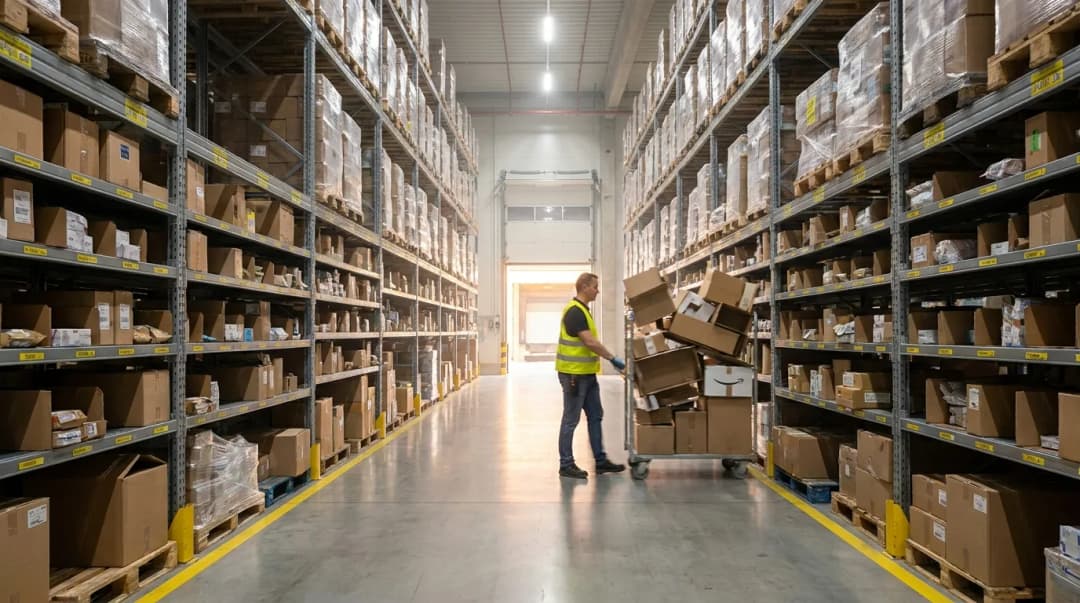
Warehouse picking is the process of retrieving items from inventory and packaging them for shipment. This usually involves using order pick lists, which detail the items that need to be picked, as well as the quantities.
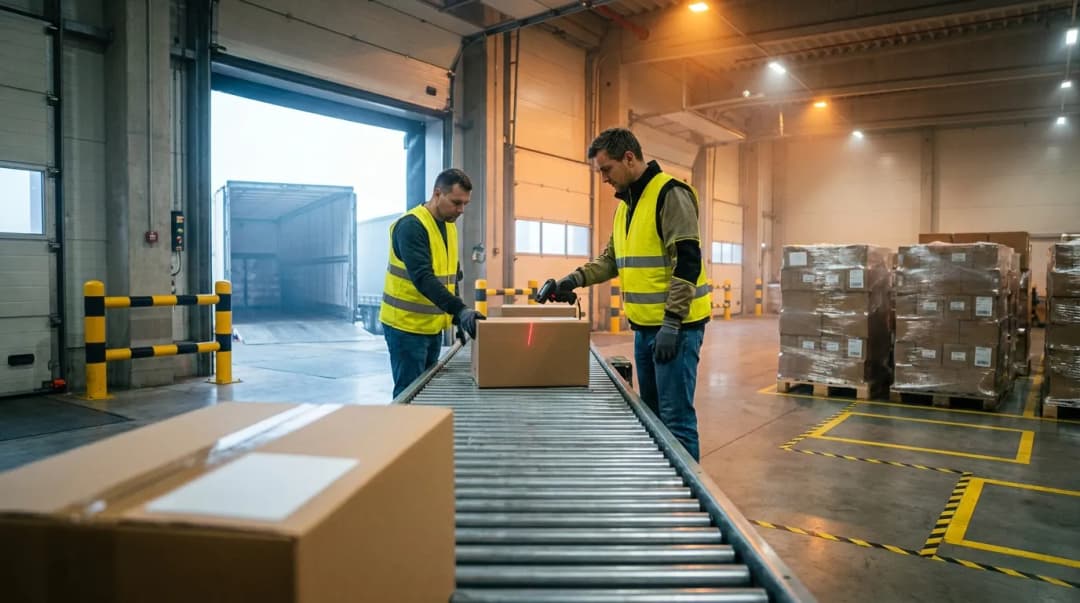
In most cases, order pickers will use some type of handheld mobile scanning device using radio frequency (RF) to help them keep track of what needs to be picked and that the correct items are being selected. To pick, they will scan the item and then add the picked product to a tote, box, or pallet for moving through the pick path. The picked items will then arrive at a packing or shipping area where they can be prepared for shipment.
The order picking process is usually the most time-consuming part of fulfilling orders in a warehouse. That’s why it’s so important to optimize your process and make sure that you’re using the best practices.

Warehouse Picking Equipment
There are a few essential pieces of equipment that order pickers will need in order to do their job.
Mobile Scanner (RF)
First, they’ll need a real-time, mobile device / RF scanner. This will connect to your warehouse management system and help keep track of the items they need to pick and the overall status of the order. While scanning, the user and scans are tracked for performance and, in the case of a third-party logistics (3PL) warehouse, for activity billing.
Picking Cart (Pick to Unit)
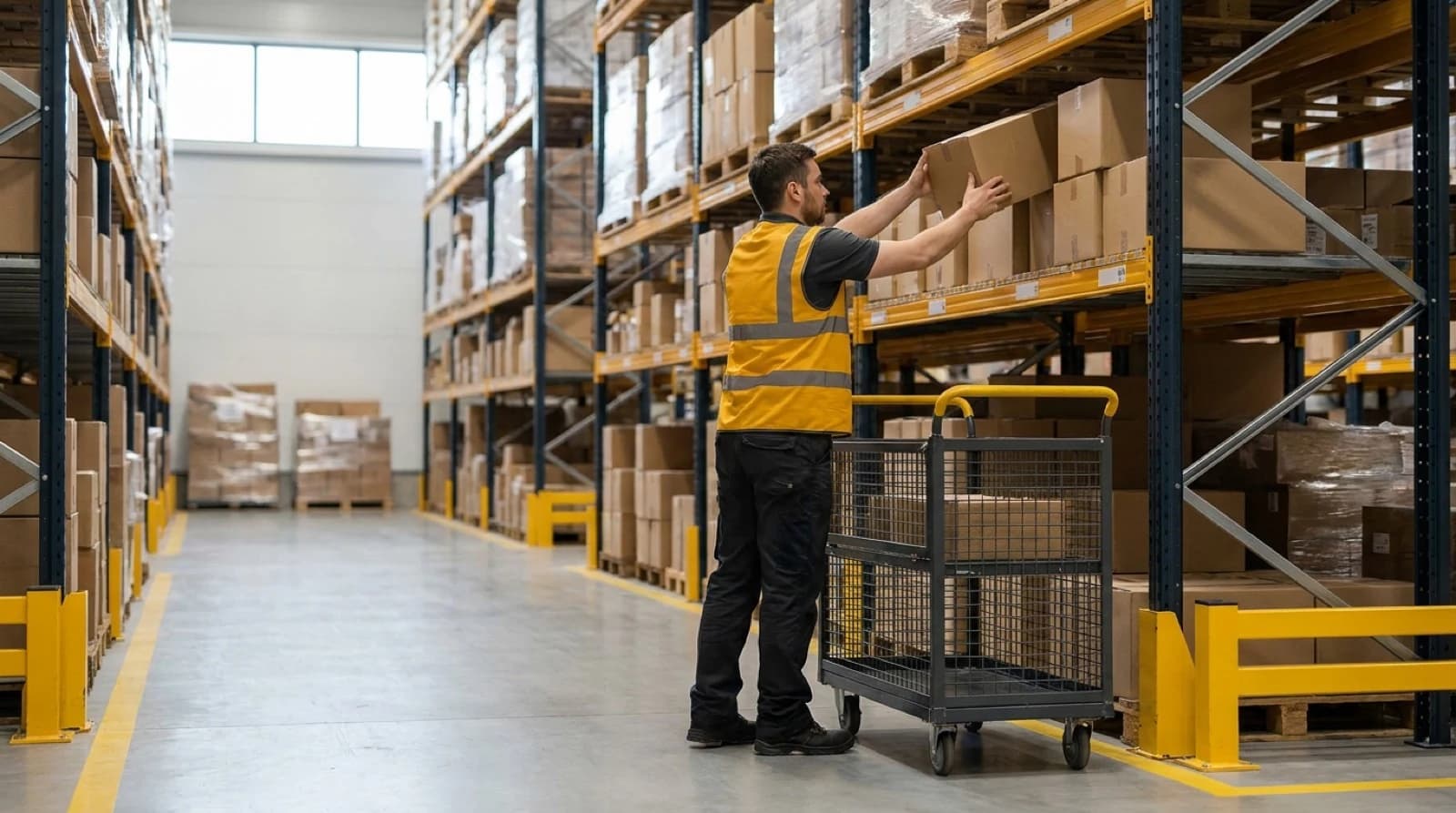
Depending on the product and unit of measure being picked, a carrier unit is needed. This could be a pallet for large order picks, picking cart, tote, or box. This helps the picker transport the items they’ve picked throughout the warehouse. The RF scanner will confirm the carrier unit picked to (and the location picked from) usually by scanning the item, the location, and the barcoded license plate on the tote or pallet.
Forklift or Pallet Jack
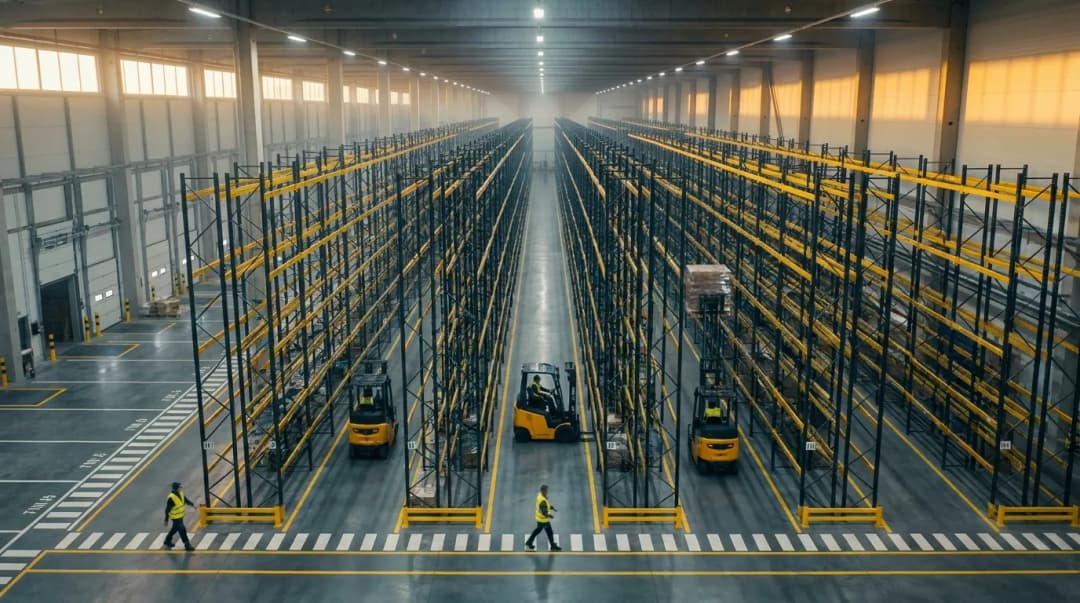
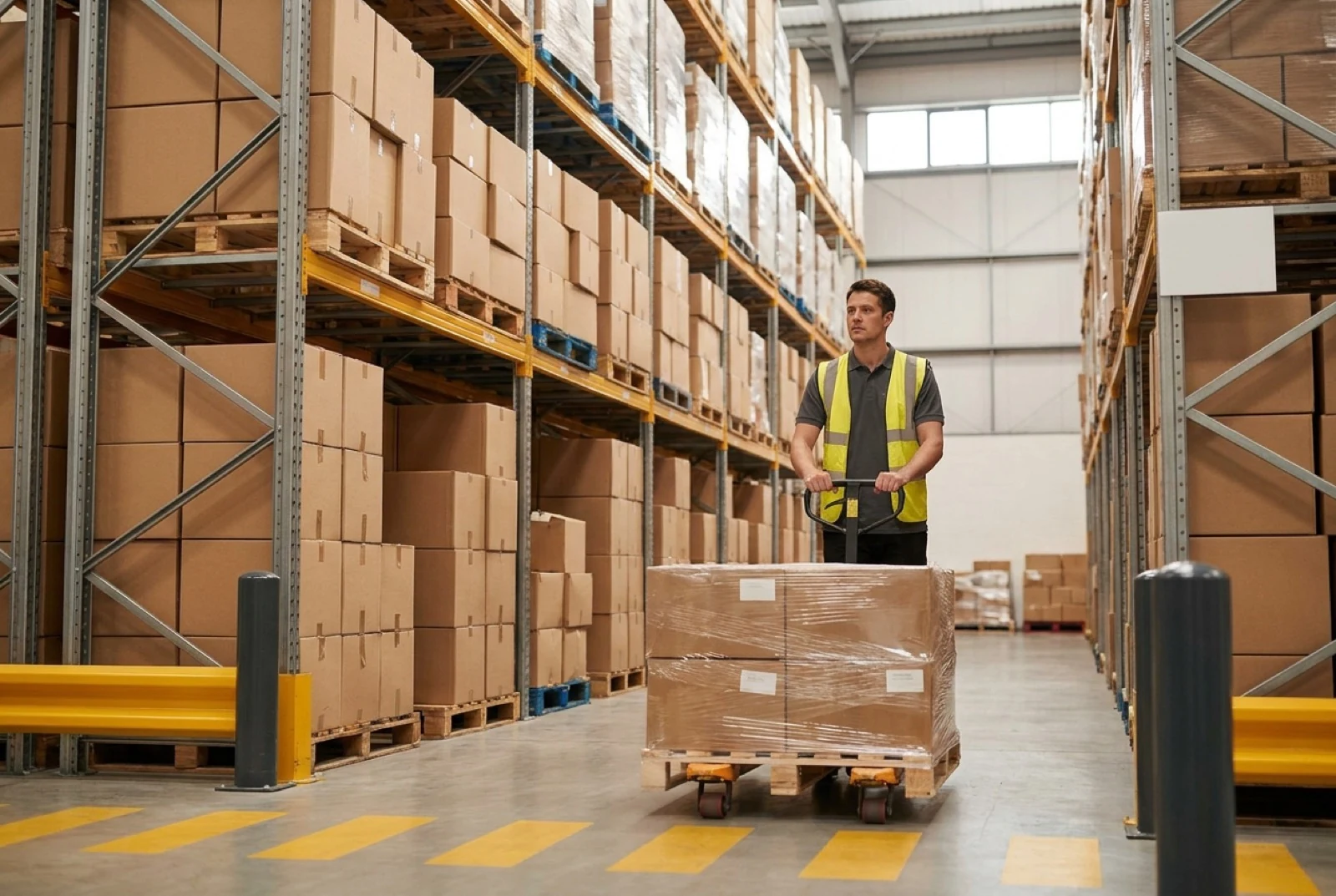
Depending on the size of your items and facility, you may also need a forklift or pallet jack. This will help workers move around the warehouse more quickly and to retrieve items from high shelves. If not all workers have this equipment, your WMS will determine what order lines will be sent to the order picker.

Popular Order Picking Methods and Strategies
There are many different warehouse picking strategies used to pick orders. Keep in mind each method has its own potential pros and cons. Here are some of the most common picking strategies:
Discrete Picking
This is one of the most common order-picking methods. Discrete picking involves order pickers going to each individual item’s location and retrieving it. This can be done using a mobile device and scanner, which will help order pickers keep track of what needs to be picked. Also, it directs the worker in an efficient pick path. The scanning of the location is a basic step but is one of the most important steps for accuracy. Elimination of paper, including eliminating the need to track picks via paper, is a basic functional benefit of the WMS.
The main advantage of discrete picking is that it’s very accurate. Pickers are less likely to make mistakes when they’re picking a single order and line items. However, the downside is that it can be very time-consuming, especially if you have a large number of orders to fulfill. For orders with a small number of order lines, it is very inefficient, as the picker needs to repeat the process over and over again for individual orders, even if they’re exactly the same.
Multi-Order Pick
With a multi-order picking strategy, workers are directed to pick via the most efficient pick path for multiple orders. The item location bar code is confirmed with a scan, the carrier unit is scanned, and multiple items are selected and scanned as they are added to the tote, allowing for a single pass through the warehouse to complete multiple orders.
Multi-order picking is usually more efficient than discrete picking because pickers can pick multiple orders at once. However, the downside is that it can be less accurate if the WMS does not track and require the picker to scan the carrier unit. If you have a tote with nine barcoded sections, the WMS needs to confirm that the picker keeps the orders segregated. There’s a greater chance to make mistakes when picking items for multiple orders at the same time, but a good WMS will allow a multi-order pick to be as accurate as a single-order pick. Please note that how the orders are batched (grouped/waved) becomes important. This is a very efficient picking method for small picks, and multiple orders of “like” items, etc.
Zone Picking
The zone picking method involves dividing the warehouse into different zones. Order pickers will then be responsible for picking all of the items in a specific zone.
The advantage of zone picking is that pickers can become very familiar with the items in their zone, which can help to improve accuracy. Additionally, they won’t need to walk as much because all of their picking will be contained in their zone, i.e. one specific area of the warehouse.
The downside of zone picking is that it requires planning and can be more difficult to implement. As it may require order consolidation in the loading/shipping lane, it can increase errors.
Zone configuration should start with an analysis of order patterns and product velocity, placing high-velocity items near shipping areas and slower-moving inventory further away. Orders can flow through zones sequentially or simultaneously. Because order profiles change over time, zones also need periodic rebalancing, and cross-training workers across zones keeps utilization even when one zone gets busier than another.

Wave Picking
The wave-picking strategy involves retrieving items for multiple orders at the same time. In essence, orders in the same “wave” are combined into a single pick order, allowing for a complete pick of an order line / item, before moving to the next pick.
Wave picking may be more efficient than discrete picking because multiple items can be retrieved at once. However, the profile of the orders for wave picking is important and it requires two picking tasks. The initial pick of the consolidated order and the second pick to complete the original orders. Usually, wave picking will bring the consolidated order picks to a staging area for sorting and completion of orders.
The downside of wave picking is that it can be more complex to implement.
Pick and Pass
This order-picking method will enable a worker to be assigned to an area (such as a zone) for picking any order lines that contain items located in the zone. Once picked, the order is ‘passed’ to the next area (zone) and the process continues until the order is completed. The last area is the packing/shipping area.
The advantage of pick and pass is that it can help to improve order picking efficiency and accuracy. Order pickers can focus on retrieving items in their area. And it is efficient because the travel time of orders is reduced.
The downside of pick and pass is that it requires a true WMS to manage the process and potentially, integration to material handling equipment, such as conveyors.
Automated Picking
Automated picking reduces human involvement in item retrieval, and it offers consistency because machines do not tire or take breaks. Common types of automated picking technology include:
-
Goods-to-person systems: Bring products to stationary pick stations, reducing walking time and increasing storage density.
-
Autonomous mobile robots (AMRs): Move across the warehouse floor independently, offering flexibility without infrastructure changes.
-
Pick-to-light systems: Use visual indicators to guide workers to the correct bins, improving speed and accuracy.
-
Voice-directed picking: Gives workers audio instructions so they can pick hands-free.
The advantages are lower labor costs from reduced travel time, higher accuracy, greater throughput, and better space utilization with dense automated storage. The downsides are significant capital requirements, less flexibility when product profiles and demand change, and implementation complexity, including integration with order management systems and warehouse layout changes.
Automated Picking vs. Zone Picking
Neither approach is universally superior. Here is how they compare:
-
Capital investment: Automated picking requires high upfront costs; zone picking has minimal initial investment
-
Operating costs: Automated picking has lower labor costs over time; zone picking maintains higher ongoing labor expenses
-
Pick productivity: Automated systems achieve higher picks per labor hour; zone picking improves over discrete methods but trails automation
-
Flexibility: Zone picking scales with labor and adapts more easily to volume changes and peak periods; automated systems may have fixed capacity constraints
-
Accuracy: Automated picking typically achieves higher accuracy; zone picking accuracy depends on execution and consolidation quality
-
Implementation time: Zone picking deploys in weeks; automated systems require months to years
-
Space utilization: Some automated systems enable much higher storage density; zone picking uses conventional racking
-
Labor requirements: Automated systems reduce headcount needs; zone picking remains labor-intensive
Why it’s Important to Choose the Right Order Picking System
It’s important to choose the right picking system for your warehouse because it can help to improve order accuracy, optimize the process, and reduce labor costs.
To choose the right warehouse picking system, look within your industry to find the picking methods that are widely used. Then, consider the size of your operation, the type of products you pick, and your budget. A profile of your picks is important.
A good WMS system will enable a company to pick the right type of order picking to fit the requirements of the order. A mixture of order picking methods is almost always the requirement for more efficient warehouses.
Factors to Weigh When Choosing
-
Volume and growth trajectory: High-volume operations can justify automation investments, while lower volumes may suit zone picking. Where you expect volume to be in a few years matters as much as current volume.
-
Order profile: Single-line orders suit automation, while complex orders with diverse products may benefit from zone picking. Product characteristics also matter.
-
Labor market: Automation is attractive in tight labor markets, while high turnover makes zone picking harder to run well.
-
Facility constraints: Automated systems may have specific building requirements, while zone picking and AMRs carry lower relocation risk for leased facilities.
-
Hybrid approaches: Combining automation for high-volume items with zone picking for the rest captures the benefits of both, and a phased rollout allows continuous improvement over time.
The Impact of Order Picking on Warehouse Profitability
Picking is such a crucial part of the warehouse process because it makes up a large portion of total order fulfillment costs. This results in a direct impact on profitability.
Therefore, even minor improvements in picking efficiency can have a significant impact on your bottom line. In fact, order picking is often one of the first areas that warehouses focus on when they’re looking to improve their overall efficiency.
To help improve profitability, you’ll need to increase picking speed while reducing errors. The faster you can accurately pick orders and get them out the door, the more profitable your warehouse will be. It can be as simple as that.
The Real Cost of Inefficient Picking
Picking errors cause cascading problems. A mis-picked item triggers a return, a replacement shipment, and potential damage to the customer relationship. Slow picking, meanwhile, drives up labor costs and limits throughput capacity, which matters more as same-day and next-day delivery become standard and direct-to-consumer orders carry fewer items per order. To evaluate your current picking performance, look at:
-
Order cycle time from receipt to ship-ready status
-
Pick accuracy rates at the line level
-
Labor hours per order or line picked
-
Walking distance and travel time as a percentage of total pick time
-
Peak capacity constraints affecting customer commitments
Best Practices
There are a few key things to keep in mind when it comes to optimizing your warehouse picking process.
Training
First, you want to make sure that your order pickers have the proper training. They should know how to use all the RF mobile devices and scanners that you have in place, as well as how to read order pick lists.
The Right Jobs
It’s also important to have a good system in place. This usually involves having dedicated pickers who are responsible for specific tasks. For example, you might have one who is responsible for retrieving items from the shelves while another is responsible for packing the orders. There are many potential methods of picking / packing / shipping. The system needs to enable a company to implement the best method.
WMS
You will also need a flexible warehouse management system (WMS). This will help you to keep track of inventory levels, generate pick lists, and know where items are located in the warehouse, all real-time and on mobile devices. Your WMS should be flexible enough to support any of the picking methods described in this guide.
Automation
Another best practice is to use automation whenever possible. This can help to speed up your picking process and improve accuracy. For example, you might use conveyor belts or robots to move items from the shelves to the packing area as discussed in the pick and pass method.
Review
Finally, it’s important to regularly review your warehouse processes and make changes as needed. You should always be looking for ways to improve efficiency and make the process more streamlined. Metrics should be tracked to measure efficiency and flag areas for improvement.
Implementing an Order Picking System
Warehouse managers or operators thinking about implementing an order picking system should keep a few things in mind. Start by referring to the tips and best practices listed in this article. Then consider these steps:
Ensure You Have an Adequate WMS
You’ll need a warehouse management system to organize and manage the order picking process. And the WMS will need to have the flexibility to adapt to your requirements. While the basics are the same, every company has specific features they may need.
Choose a Strategy
Decide which warehouse picking method is right for you. As we mentioned above, there are different methods to choose from. Profile your orders and items to get a sense of which method(s) will be part of your best picking strategy.
Storage and Organization
Have proper storage solutions like racks and use human-readable signage and barcode labeling to keep organized. Slotting, location maps, pick paths, etc., will help to ensure that your staff can quickly and easily find the items they need.
Equipment
Invest in the right equipment for your warehouses, such as mobile devices and scanners, carts, automated guided vehicles (AGVs), pallet jacks, and forklifts. This will help pickers to work more efficiently and accurately.
Training
Train your employees so they know how to use your WMS as well as the mobile devices and scanners. They should also be familiar with order pick lists and your overall picking process. Cover exception handling as well as normal operations.
Plan With Data and Test Before Cutover
Data analysis should come before implementation. Order history reveals patterns and peak requirements, SKU velocity analysis identifies items that need different treatment, and documenting current processes gives you a baseline for measuring improvement. Engage stakeholders early to build commitment and surface concerns that might derail the project. Then pilot the new method in a limited configuration to validate your assumptions, run integration testing to confirm your systems communicate with ERP and business systems, and plan the cutover carefully, since your transition strategy shapes both risk and timeline.
Tips for Improving Order Picking Efficiency
To improve picking efficiency in an established warehouse, we suggest following these tips.
-
Improve storage and container organization. This will help to minimize the time that order pickers spend walking around the warehouse and looking for items. Re-slot areas based on velocity, “frequently bought with,” or other attributes on the item.
-
Try batching orders together. This means grouping together orders that share common items. This can help to save time because order pickers will only need to retrieve the items once. This method is described in the multi-order picking section above.
-
Keep frequently ordered goods together and close to the packing area. This will help minimize steps for pickers and get hot products out the door faster.
-
Alternatively, try a different order picking system that is designed for your specific warehouse layout. This will help to ensure that order pickers are working in the most efficient route possible.
-
It may seem obvious, but place frequently picked goods at eye level so workers spend less time looking for them.
-
Consider adopting automation where needed. Conveyors can keep pickers in the aisles longer. Robot arms can scan and move products quickly. Be sure you take the time to evaluate and consider the projected return on investment (ROI) when deciding where to invest.
Future Trends in Warehouse Picking
Picking technology is advancing quickly, and understanding the trends helps you plan future investments.
Artificial Intelligence and Machine Learning
AI optimizes pick paths, predicts order volumes, and identifies patterns. Machine learning algorithms can improve zone design, staffing, and inventory placement, and computer vision expands automation feasibility for more diverse products.
Robotics Evolution
As robotic capabilities advance, automation suits more operations. Collaborative robots augment human pickers rather than replacing them, while swarm robotics offers resilience and scalability.
Integration and Connectivity
IoT sensors provide real-time data that helps teams identify problems quickly and coordinate operations across functions. Digital twin technology creates virtual models of the warehouse for testing changes, predicting outcomes, and training workers.
Sustainability Considerations
Energy efficiency increasingly influences system selection. Electric automation systems reduce emissions, dense storage decreases space requirements, and equipment lifecycle considerations, such as remanufacturing and recycling programs, extend beyond purchase economics.
Upgrade to a Better WMS
It goes without saying that to improve picking efficiency, you should be using a warehouse management system (WMS) that meets the needs of your business. A good WMS can help automate many of the tasks involved in order picking described in this article including proper order waving, releasing, etc. And the WMS can be rule driven to collect data as required (i.e. lot number).
It can also provide real-time visibility into the picking process. This means that you’ll be able to see how order pickers are performing and make changes as needed, including the assignment of additional pickers to meet pick/pack/shipping deadlines.
To see how Cadence WMS can help improve your picking process, request a demo.
Conclusion
Order picking is an important part of any warehouse operation. By following the tips and best practices above, you can take steps to improve the order picking efficiency in your warehouse.
You should also invest in a flexible warehouse management system (WMS) such as Cadre’s Cadence WMS, to further improve picking accuracy and efficiency.
If you’re thinking about implementing a new WMS to improve order picking in your warehouse, request a demo.
Frequently Asked Questions
How long does it typically take to train new warehouse pickers?
Training time for new warehouse pickers typically ranges from 1-3 weeks depending on warehouse complexity and picking methods used. Simple discrete picking can be learned in a few days, while advanced methods like wave picking or pick-and-pass require more extensive training. Factors like WMS complexity, product variety, and warehouse layout also influence training duration.
What are the most common mistakes that reduce picking accuracy?
The most common picking mistakes include failing to scan location barcodes, mixing up similar product SKUs, and incorrectly sorting items in multi-order picks. Poor lighting, cluttered pick faces, and rushing through tasks also contribute to errors. Implementing proper scanning procedures and maintaining organized inventory locations significantly reduces these accuracy issues.
How do I calculate the ROI of implementing a new picking method?
Calculate picking ROI by measuring labor cost savings, accuracy improvements, and productivity gains. Track metrics like picks per hour, error rates, and overtime costs before and after implementation. Factor in equipment costs, training expenses, and WMS upgrades. Most warehouses see ROI within 6-18 months through reduced labor hours and fewer shipping errors.
What warehouse size requires switching from discrete to batch picking?
Warehouses processing over 100-200 orders daily typically benefit from switching to batch or multi-order picking methods. The decision depends more on order profiles than warehouse size – facilities with many small orders containing similar items see greater efficiency gains. Consider batch picking when discrete methods result in excessive travel time between locations.
Can different picking methods be used simultaneously in one warehouse?
Yes, many warehouses successfully use hybrid picking strategies based on order characteristics. For example, large bulk orders might use discrete picking while small e-commerce orders use batch picking. The key is having a WMS that can intelligently route different order types to appropriate picking methods based on factors like order size, priority, and product location.
How does automated picking improve warehouse efficiency?
Automated picking improves warehouse efficiency by reducing human error and increasing speed. Technologies like autonomous mobile robots and pick-to-light systems deliver consistent performance, which is crucial in labor-constrained environments. These systems minimize walking time and improve accuracy, leading to faster order processing. For example, goods-to-person systems bring items directly to workers, simplifying operations and boosting overall productivity.
What are the benefits of zone picking in warehouses?
Zone picking divides the warehouse into specific areas and assigns workers to them. This reduces walking time and increases pick speed, as employees become familiar with the items in their zones. It also improves accuracy by limiting the scope of each worker’s responsibility. Zone picking is particularly effective in large warehouses with diverse product ranges.
What are common types of automated picking technology?
Common types of automated picking technology include goods-to-person systems, autonomous mobile robots, pick-to-light systems, and voice-directed picking. Goods-to-person systems bring items to workers at stationary stations, reducing walking and increasing storage density. Autonomous mobile robots move across the warehouse floor independently, offering flexibility without infrastructure changes. Pick-to-light systems guide workers to the correct items using visual indicators, and voice-directed picking lets workers pick hands-free using audio instructions.